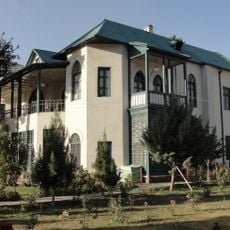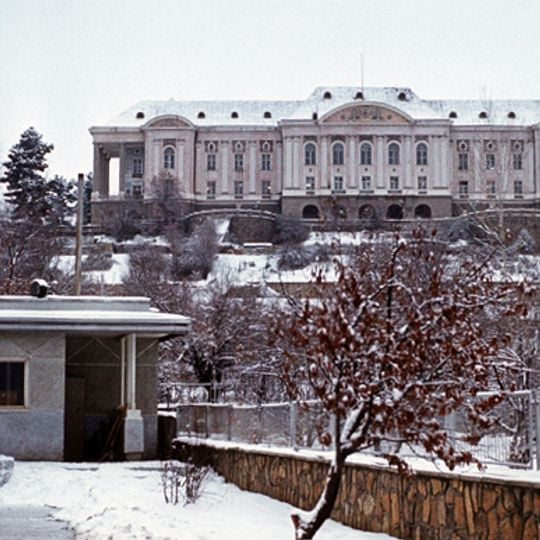
Tajbeg Palace, Royal palace in Kabul, Afghanistan
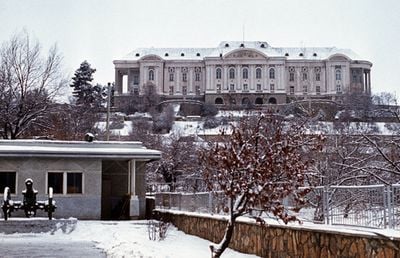
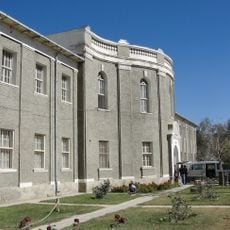
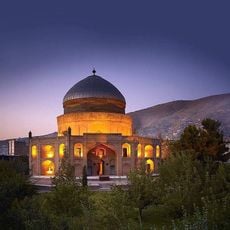
Tajbeg Palace is a three-story building in Kabul Province with 80 rooms that combines European architecture with Afghan decorative patterns. The facade shows arches and ornamental details, while the interior includes large halls and a central reception area.
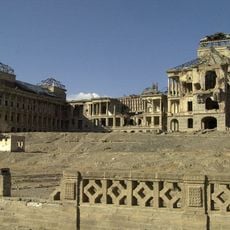
King Amanullah Khan ordered the construction starting in 1920 to create new government buildings in Kabul. Later conflicts caused damage to the structure and changed its original function as a royal residence.
The Dari name Tajbeg means "Palace of the Large Crown"; the building is also called the Queen's Palace. In 1926–27 the Swedish memoirist Aurora Nilsson, living in Kabul with her Afghan husband, was invited by Queen Soraya to describe Western customs to the queen and the king's mother.
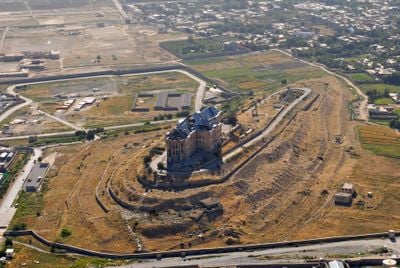
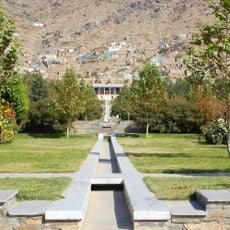
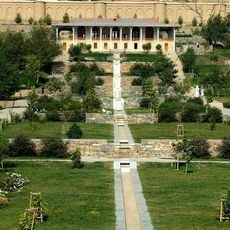
The building stands on a hill in southwest Kabul and offers views of the Darul Aman district and the Hindu Kush mountain ranges. Access follows a road that winds upward through terraced garden areas.
On 27 December 1979, about 700 troops including 54 KGB spetsnaz from the Alpha and Zenith groups stormed the palace in Operation Storm-333, killing PDPA general secretary Hafizullah Amin, who had moved in on 20 December. The Soviet 40th Army then used it as headquarters until February 1989.
The community of curious travelers
AroundUs brings together thousands of curated places, local tips, and hidden gems, enriched daily by 94,125 contributors worldwide.