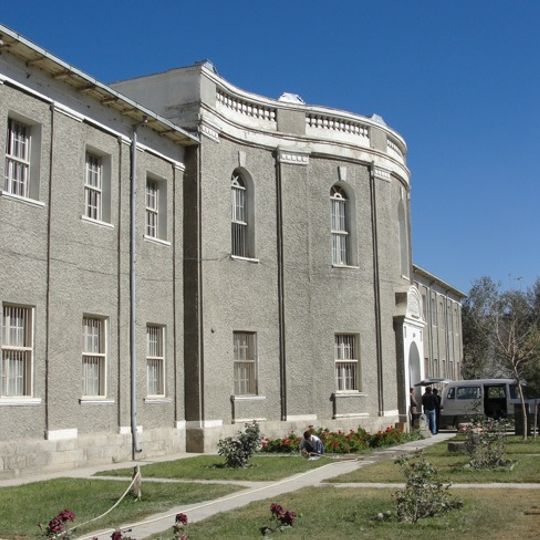
National Museum of Afghanistan, National museum in Kabul, Afghanistan
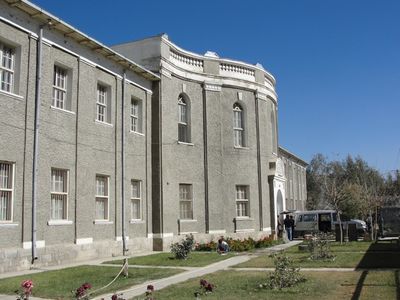
The National Museum of Afghanistan is a two-story building in the Darulaman area, about eight kilometres south-west of central Kabul, across the street from Darul Aman Palace. Its grey stone facade has a long rectangular wing with two rows of framed windows and a curved section with tall arched windows, a balustraded parapet and a large arched doorway. A white inscription band is set into the upper wall.
The museum opened in 1919 under King Amanullah Khan, first housed in the Bagh-e Bala Palace, and moved to its present Darulaman building in 1931. Looting and rocket fire during the civil war destroyed about 70 percent of the 100,000 objects on display, and in 2001 the Taliban destroyed at least 2,750 works.
The museum's name in Dari, Mūzīyam-e Millī-ye Afghānistān, is used on its signage. Its holdings come entirely from excavations inside Afghanistan, from prehistoric sites to the 20th century. Among the best-known pieces is the Rabatak Inscription of King Kanishka, which survived the 1990s.
The museum is open daily except Friday from 8 AM to 4 PM and offers tours in English and Dari. It's helpful to check current conditions beforehand, as the situation may change.
After the war, international organizations helped bring back more than 8,000 stolen objects since 2007. Among them are limestone sculptures that were even repatriated from Germany.
The community of curious travelers
AroundUs brings together thousands of curated places, local tips, and hidden gems, enriched daily by 92,621 contributors worldwide.