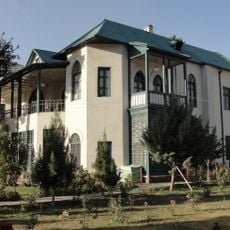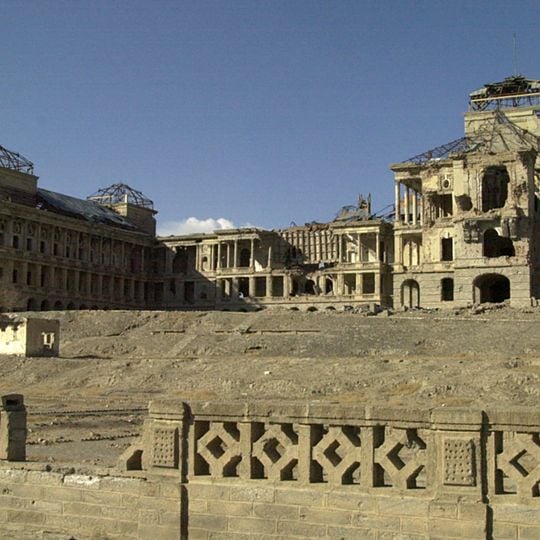
Darul Aman Palace, Neoclassical palace in Kabul, Afghanistan
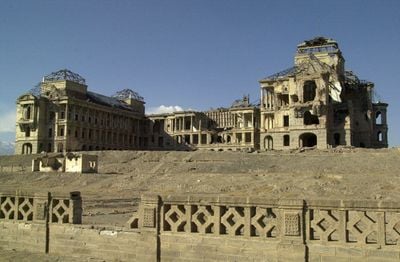
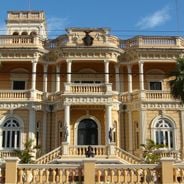
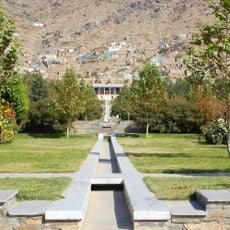
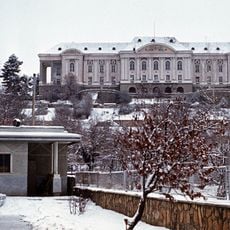
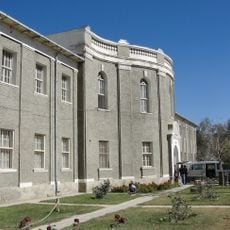
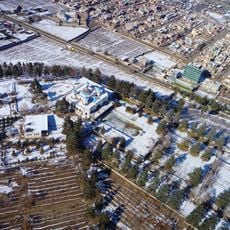
Darul Aman Palace is a U-shaped brick building in the neoclassical style, set on a hilltop about 16 km southwest of central Kabul. It has three floors and 150 rooms, including a semicircular main hall, and rises about 33 m to four domed towers on the roof. Corinthian columns decorate the third-floor galleries of the southern facade, and marble spiral staircases link each floor.
The king commissioned the construction in the 1920s as part of a plan to create a new capital outside old Kabul. The building survived decades of war and was rebuilt after heavy damage during conflicts in the late twentieth century.
The name means "Abode of Peace" and also plays on "Abode of Aman[ullah]", the king who built it. Swedish memoirist Rora Asim Khan, living in Kabul in 1926–27, was invited by Queen Soraya to describe Western lifestyle and customs to the queen and the king's mother. The 150-room building later housed Kabul University's medical school, a warehouse and smaller ministries.
The palace sits outside the center and is best reached by car or taxi. Visitors should check local information about opening and safety conditions before going, as circumstances change often.
Two French firms and one German company worked on the design, combining European styles with local craftsmanship. The interior now shows carefully restored ceilings and floors that reproduce the original color scheme and materials.
The community of curious travelers
AroundUs brings together thousands of curated places, local tips, and hidden gems, enriched daily by 92,688 contributors worldwide.