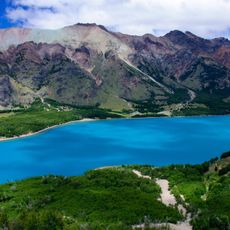
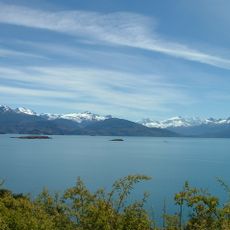
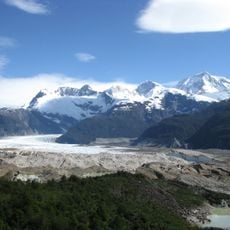
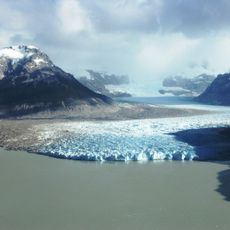
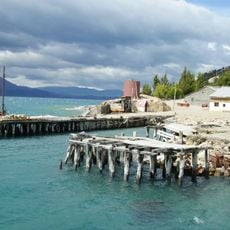
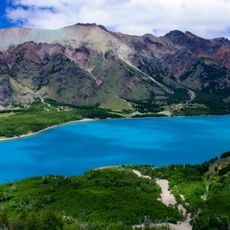
San Rafael Lagoon, Coastal lake in Laguna San Rafael National Park, Aysén Region, Chile.
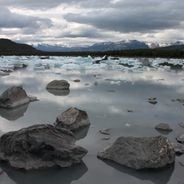
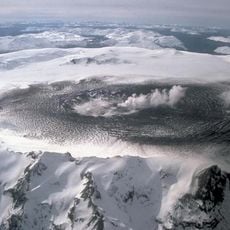
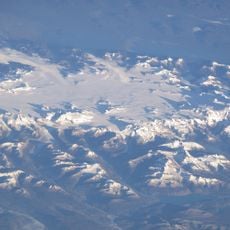
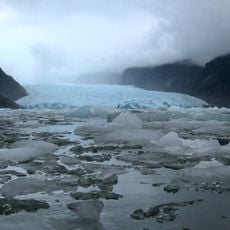
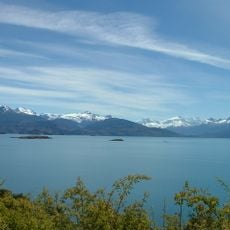
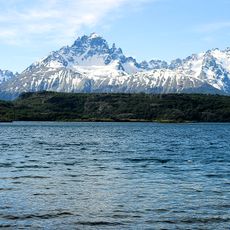
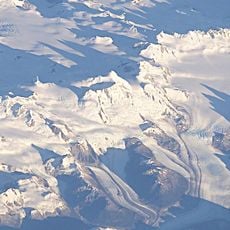
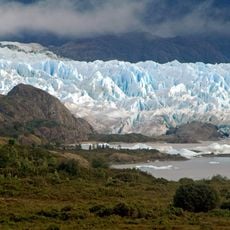
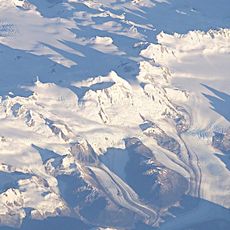
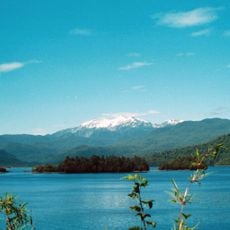
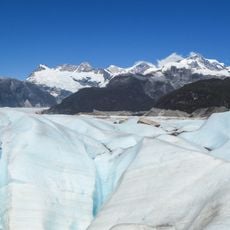
San Rafael Lagoon is an arc-shaped coastal lake of 123 km² in the Aysén Region, formed by the retreat of the San Rafael Glacier at the head of the Northern Patagonian Ice Field. To the north it connects to the Moraleda Channel through the Río Témpanos; the Ofqui Isthmus and Taitao Peninsula lie to the south and west. Icebergs calved from the glacier float on its surface.
San Rafael Lagoon was reached by the Antonio de Vea expedition in December 1675, which entered via the Témpanos River and noted windy conditions, the San Rafael Glacier and the swampy shores of the Ofqui Isthmus. The expedition recorded no ice floes and reported that the glacier did not reach far into the lake, suggesting the Little Ice Age effects were not yet visible there. In 1857 Francisco Hudson and Francisco Fonck explored the lake looking for a passage south that avoided the Tres Montes Peninsula.
The lagoon's name comes from a mission settlement established shortly before 1769, when pilot Machado's expedition explored these inlets. In late 1766 the Jesuit missionary José García Alsué visited the lagoon seeking canoe-faring indigenous people to evangelise and bring to the Cailín mission in Chiloé. Francisco Astaburuaga recorded in 1899 that the name came from that earlier mission post.
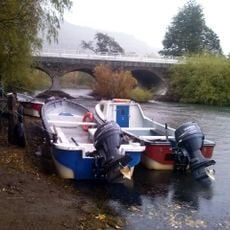
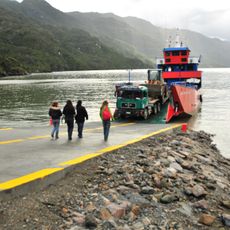
Reaching the lake requires flying to Puerto Montt first, then traveling by boat or vehicle through the remote region. Weather here changes quickly, so visitors should pack layers and waterproof gear for any season.
The lagoon holds a resident population of leopard seals, unusual for Chile, where sightings elsewhere are sporadic. Studies show the animals return to the same site and use icebergs calved from the San Rafael Glacier as platforms to rest, moult and hunt.
The community of curious travelers
AroundUs brings together thousands of curated places, local tips, and hidden gems, enriched daily by 94,127 contributors worldwide.