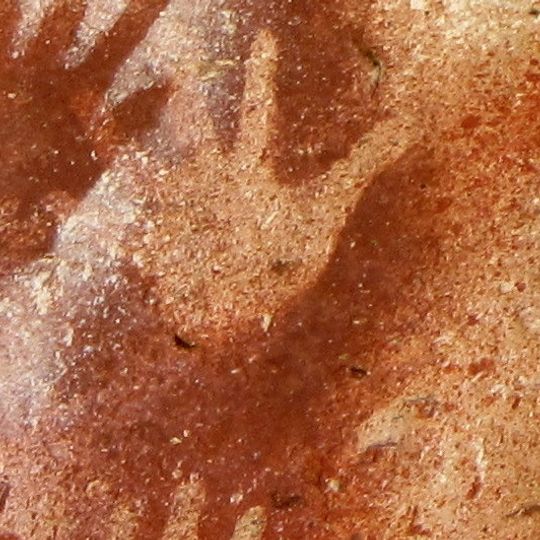
Cueva de las Manos, Prehistoric rock art cave in Santa Cruz, Argentina
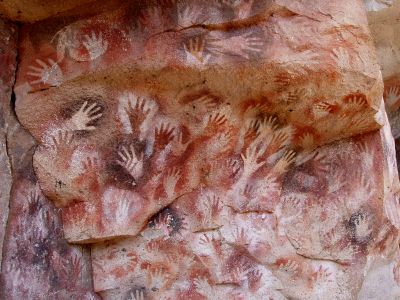
The cave walls display hundreds of hand stencils in red, black, white, and yellow colors created using mineral pigments and bone-made pipes.
Archaeological research confirms human occupation and artistic activity at the site from 7300 BC to 700 AD during the Archaic period.
The paintings document hunting techniques of early inhabitants through depictions of guanacos, human figures, and weapons like bolas for animal capture.
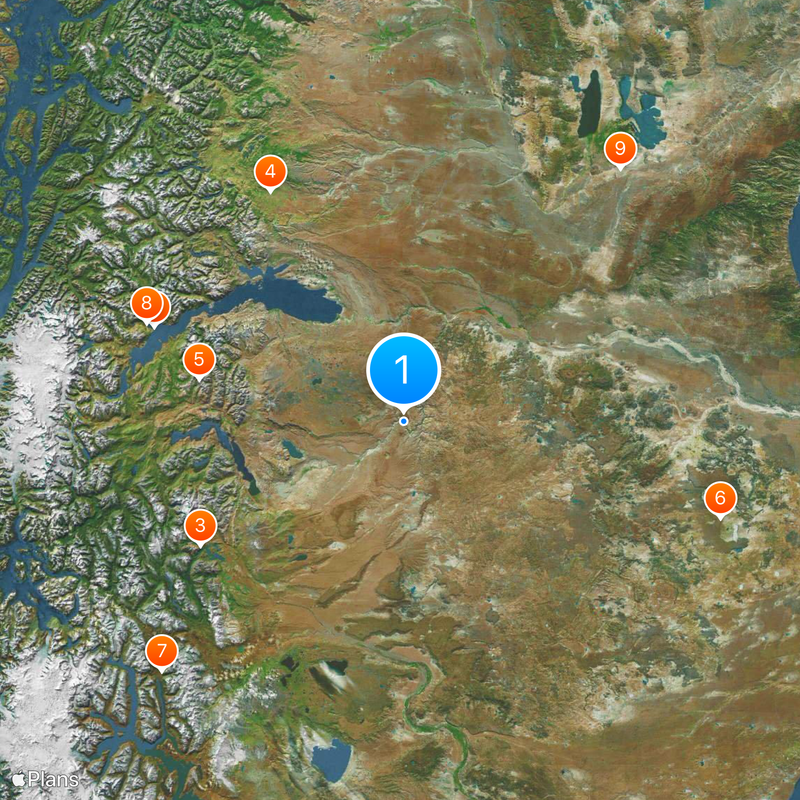
Visitors reach the cave through gravel roads connecting to Ruta 40, located 163 kilometers south of Perito Moreno in Argentine Patagonia.
The site contains over 800 negative hand impressions, with most prints representing left hands at the size of 13-year-old individuals.
Location: Santa Cruz Province
Location: Lago Buenos Aires
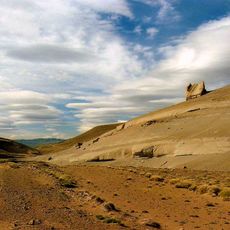
Made from material: ignimbrite
GPS coordinates: -47.15527,-70.65597
Latest update: May 28, 2025 11:42
Argentina extends across multiple climate zones and contains numerous geological formations. The country encompasses high mountain ranges in the Andes, salt flats in the northwest, rock formations in Patagonia, and extensive grasslands. These areas display the region's geological history and the adaptation of human settlements to different environments. The sites include volcanic craters, thermal springs, canyons, and historic villages. Many of these locations lie away from main routes and require several hours of travel. The regions document pre-Columbian cultures, colonial history, and traditional ways of life that continue today.
The Argentine landscape offers far more than its well-known urban centers. In the northwest, geological formations like Quebrada de las Conchas with its red sandstone cliffs and Talampaya National Park with its eroded canyons draw visitors. Quebrada de Humahuaca displays layers from millions of years of geological history, while Purmamarca sits at the base of the multicolored Cerro de los Siete Colores. Further north, Antofagasta de la Sierra allows access to high-altitude deserts and salt lakes. The Andes shape western Argentina with varied landscapes. The Uspallata Valley serves as a passage between Mendoza and Chile. In Patagonia, the granite spires of Monte Fitz Roy rise above glaciated valleys, while Los Alerces National Park protects ancient alerce trees and crystalline lakes. Villa Traful and Nahuel Huapi National Park show the Patagonian lake district with forested shores and volcanic peaks. Archaeological sites and nature reserves complete these remote destinations. Cueva de las Manos preserves prehistoric rock art from more than 9,000 years ago. The Ruinas de Quilmes mark a pre-Columbian settlement in the Andes. Bosques Petrificados de Jaramillo contains fossilized araucaria trees from the Jurassic period. The Esteros del Iberá form one of South America's largest wetlands, home to caimans, capybaras and over 350 bird species. La Cumbrecita offers hiking trails through alpine forests in the Sierras de Córdoba, while Gaiman preserves the Welsh colonial history of Patagonia.
Patagonia extends across the southern reaches of Chile and Argentina, encompassing a range of natural landscapes from active glaciers to volcanic peaks. The region presents a mixture of ice, stone and water, with national parks protecting thousands of square miles of undeveloped terrain. The land was shaped by glacial processes that left deep valleys, lakes and dramatic mountain formations. The collection includes prominent locations across both countries. In Argentina, Mount Fitz Roy and Cerro Torre rise above the valley of El Chaltén, while Perito Moreno Glacier is one of the few ice formations worldwide that continues to advance. Los Alerces National Park protects ancient alerce trees that have stood for millennia. On the Chilean side, the Marble Caves at General Carrera Lake form carved rock structures, Queulat Hanging Glacier feeds waterfalls, and the towers of Torres del Paine define one of South America's most recognizable mountain landscapes. San Rafael Lagoon provides access to tidewater glaciers, while remote protected areas such as Kawésqar National Park and Pumalín Douglas Tompkins National Park preserve extensive temperate rainforests. Historical sites like Cave of Hands display prehistoric rock art.
Catedral de Mármol
159 km
Perito Moreno National Park
140.4 km
Balmaceda, Chile
160 km
Patagonia National Park
124.6 km
Bosques Petrificados de Jaramillo National Park
196 km
Villa O'Higgins
204 km
Puerto Río Tranquilo
164.7 km
Petrified Forest of José de Ormachea
201.1 km
Monumento natural Bosques Petrificados
204.1 km
Puerto Ingeniero Ibáñez
137.1 km
Cerro San Lorenzo
133.9 km
Parque Nacional Cerro Castillo
173.8 km
Petrified Forest
192.7 km
Villa Cerro Castillo
162.3 km
Exploradores Glacier
204.7 km
Nef Glacier
198.2 km
Campamento minero Puerto Cristal
147.6 km
Lago Jeinimeni National Reserve
111.8 km
Lago Cochrane Nature Reserve
134.3 km
Colonia Glacier
200.2 km
Museo Regional de Aysén
205.2 km
Cerro Pico Truncado
194.6 km
Calluqueo Glacier
142.1 km
Construcciones de la Sociedad Industrial de Aysén
205.3 km
Bodegas portuarias del río Ibáñez
136.7 km
Leones Glacier
199.7 km
Museo De Arqueología Carlos Gradin
65.9 km
Glaciar Exploradores
204 kmReviews
Visited this place? Tap the stars to rate it and share your experience / photos with the community! Try now! You can cancel it anytime.
Discover hidden gems everywhere you go!
From secret cafés to breathtaking viewpoints, skip the crowded tourist spots and find places that match your style. Our app makes it easy with voice search, smart filtering, route optimization, and insider tips from travelers worldwide. Download now for the complete mobile experience.
A unique approach to discovering new places❞
— Le Figaro
All the places worth exploring❞
— France Info
A tailor-made excursion in just a few clicks❞
— 20 Minutes