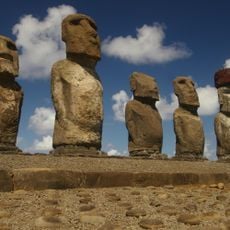
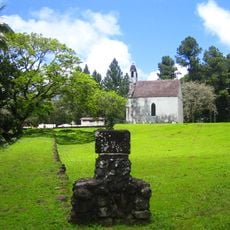
Terevaka, Shield volcano in Easter Island, Chile
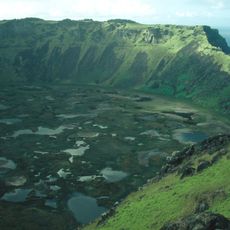
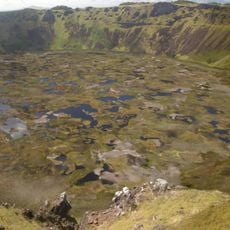
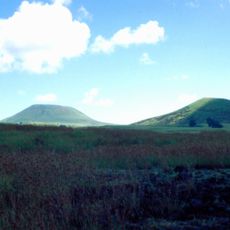
Mauŋa Terevaka is an irregular volcanic cone that makes up about 80% of Easter Island's surface, its summit the island's highest point. Its slopes carry numerous cinder cones and craters, including Rano Aroi, a crater holding one of the island's three lakes, and more than 800 caves such as Ana Te Pahu, Ana Te Pora and Ana Kakenga.
Terevaka is the youngest of Easter Island's three main volcanoes; its activity ended the formation of the island's triangular shape. Spanish sources place its origin in an eruptive process about 12,000 years ago, with a last lava flow roughly 10,000 years ago. The Roiho lava field has been dated at between 110,000 and 150,000 years old, and the volcano is less than 400,000 years old.
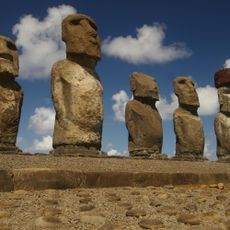
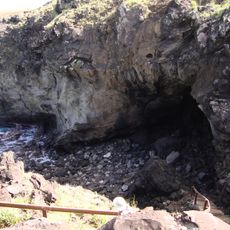
Ahu Vaimata and Ahu Maitaki Te Moa are the main ceremonial platforms on the slopes of Terevaka, and more than 800 caves lie on its flanks, among them Ana Te Pahu, called the Cave of the Bananas for the vegetation at its mouth, Ana Te Pora and Ana Kakenga, the Cave of the Two Windows. Difficult access has kept these sites less visited than those elsewhere on the island.
A marked hiking trail leads from near Ahu Akivi to the summit, with the round trip taking roughly four hours. Weather can change quickly at the top, so bring waterproof clothing and wear sturdy hiking boots to handle the uneven ground.
The summit stands as one of the most isolated locations on Earth, with no higher peaks within roughly 2,800 kilometers. This extreme geographic position made the mountain a natural landmark that early Polynesian settlers would have recognized immediately upon arrival.
The community of curious travelers
AroundUs brings together thousands of curated places, local tips, and hidden gems, enriched daily by 93,672 contributors worldwide.