Ahu Akivi, Archaeological platform in Easter Island, Chile
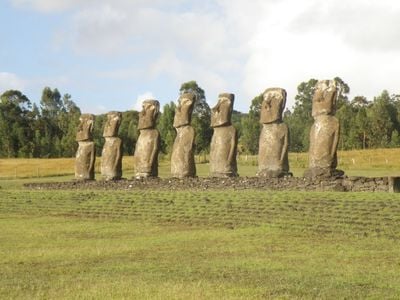
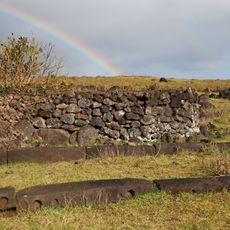
Ahu Akivi is a rectangular stone platform with wings projecting north and south, reached by a ramp and fronted by a ceremonial plaza stretching 25 metres west. Seven moai of equal shape and size stand on it, carved from grey-brown rock with heavy brows and long rectangular noses. A low wall of dark uneven stones runs beneath them, with rows of small round stones set in the grass in front.
Ahu Akivi was built in two phases by the Rapa Nui people. A central rectangular platform with north and south wings, an approach ramp and a 25-metre ceremonial plaza to the west date from the 16th century; the seven equal-sized moai were erected in the early 17th century. In 1960 William Mulloy and Gonzalo Figueroa García-Huidobro found the statues toppled and restored them.
The seven moai represent scouts sent by Hotu Matu'a's priest, who stayed awaiting the king; unlike other island statues, they face the sea. The site belongs to the Miru, the highest-ranking clan, and gives its name to one of the seven regions of Rapa Nui National Park.
Ahu Akivi lies inland on the southern slope of Maunga Terevaka, at 140 metres elevation and about 10 kilometres north of Hanga Roa; an inland road reaches it via the Terevaka cone. The seven moai face the sunset at the spring equinox, so late afternoon light falls on their fronts. The ground around the platform is flat agricultural land.
The moai figures are aligned according to precise astronomical calculations and face exactly toward the point where the sun sets during the spring equinox. This alignment reveals the advanced astronomical knowledge of ancient Rapa Nui people.
The community of curious travelers
AroundUs brings together thousands of curated places, local tips, and hidden gems, enriched daily by 93,487 contributors worldwide.