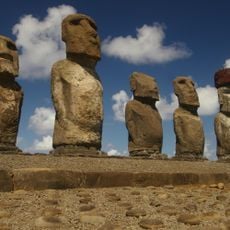
Poike, Ancient volcano in Easter Island, Chile
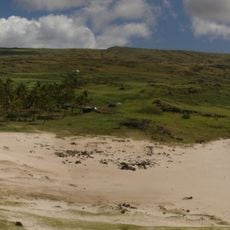
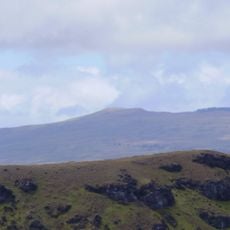
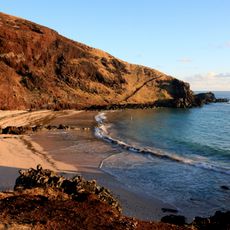
Poike is a volcano on Easter Island that rises to approximately 370 meters above sea level, forming the island's eastern headland with steep cliffs. Geological layers and native vegetation are visible from the summit area.
Poike is the oldest of Rapa Nui's three main volcanoes. Estimates hold that it rose from the sea floor in two eruptions, the first around three million years ago and the second about 900,000 years ago. Its weathered slopes and relatively stoneless soil result from that age.
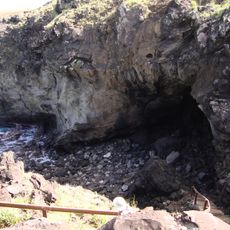
On Poike's northern slope stand three small mounds, Maʻunga Vai a Heva, Maʻunga Tea-Tea and Maʻunga Parehe. In the cliffs of the same slope lies Ana O Keke, the "Cave of the Virgins", a name recorded in Rapa Nui tradition.
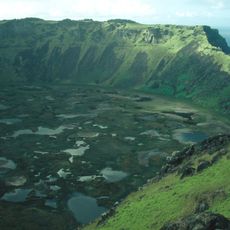
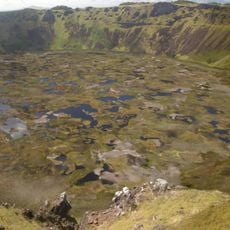
Poike forms the island's eastern headland, reached by walking routes across its weathered slopes; the terrain is uneven and there is little shade, so start early in the day. The crater Pu A Katiki, 150 m across and about 15 m deep, lies dry on the summit. The Ana O Keke cave sits in the northern cliffs.
The Poike ditch is a cliff line separating the lava flows of Poike from those of Terevaka, cutting across the island at the boundary between the two volcanoes. Poike is the oldest of Rapa Nui's three main volcanoes, and its soil is the most weathered and relatively stoneless.
The community of curious travelers
AroundUs brings together thousands of curated places, local tips, and hidden gems, enriched daily by 94,363 contributors worldwide.