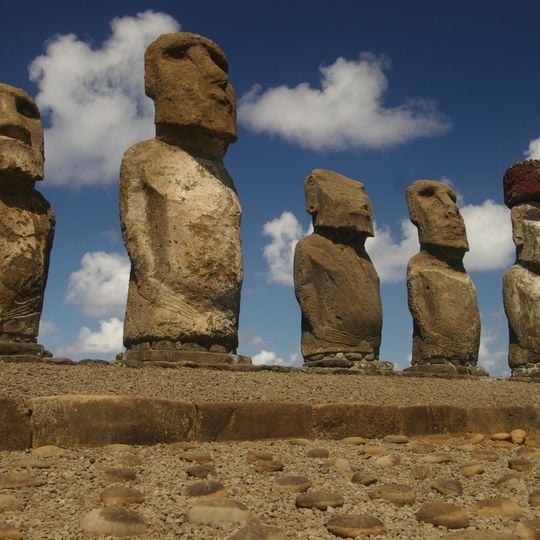
Moai

Log in to your account

AroundUs is a community-driven map of interesting places, built by curious explorers like you. It grows with every review, story, and photo you share.
Connect to save your favorite spots, contribute locations, and create personalized routes.
By continuing, you accept our Terms and Conditions and our Privacy Policy
Add to collection
Map
Suggest a change
Share

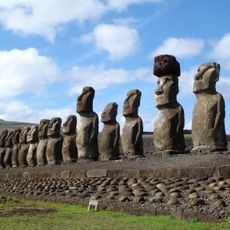
Moai, Archaeological site in Easter Island, Chile

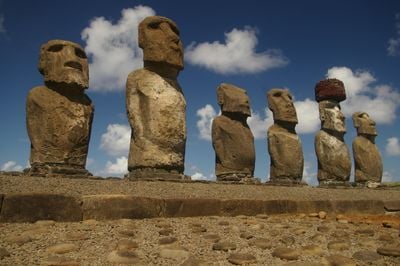
These monumental figures carved from volcanic rock stand scattered across the slopes of Rano Raraku volcano, where 397 statues remain today. Most were shaped directly from the soft tuff stone of the quarry between the 13th and 16th centuries, with many left unfinished at various stages of carving.

Carving began in the 13th century when the Rapa Nui people started shaping these figures at the quarry and moving them across the island with ropes and wooden sledges. Production stopped around 1600 as resources became scarce and social changes disrupted the island's traditional systems.

Local guides often share stories about how each statue once represented a specific ancestor, creating a direct connection between families and the stone figures. Visitors today can witness how the Rapa Nui community continues to honor these ancestors through ceremonies held near the platforms where the statues stand.

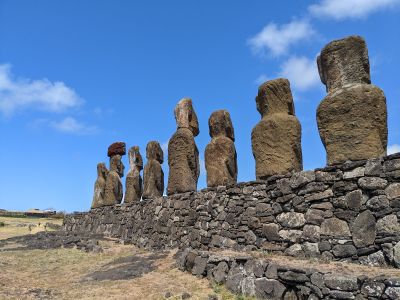
Travelers can walk among the statues at several sites around the island, including Ahu Tongariki where fifteen restored figures stand in a single row along the coast. Early morning or late afternoon offers softer light and calmer conditions for exploring the outdoor sites comfortably.

Many statues originally had eyes made from white coral with pupils of black obsidian, though most of these have disappeared over time. Some unfinished figures still embedded in the quarry walls reveal exactly how carvers worked from front to back, leaving the spine attached until the final stage.

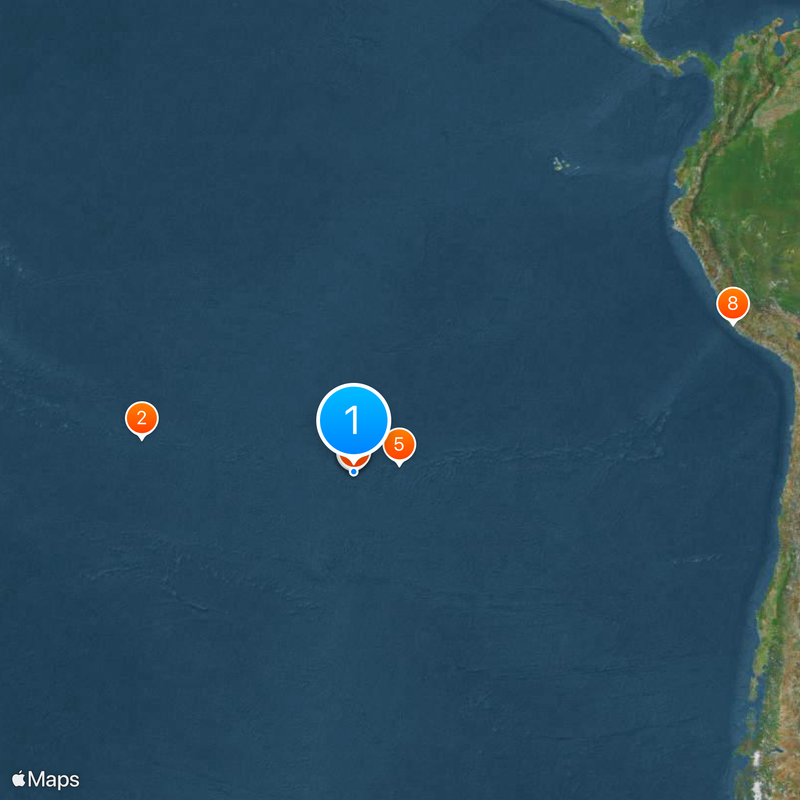
Location: Easter Island

GPS coordinates: -27.11423,-109.36399

Latest update: December 2, 2025 21:56

Archaeological sites across the world

These archaeological sites document the development of human civilizations across thousands of years. They range from the earliest known temple structures like Göbekli Tepe in Turkey, dated to around 9500 BCE, to the preserved remains of Pompeii, frozen in time by a volcanic eruption in 79 CE. Each location offers insights into the technical abilities, religious beliefs, and social structures of past cultures. The collection includes monuments such as the Great Pyramid of Giza in Egypt, standing for over 4,500 years, and Machu Picchu in the Peruvian Andes, a 15th-century Inca stronghold at 7,970 feet (2,430 meters). In China, the Terracotta Army guards the tomb of the first emperor with thousands of life-size soldiers, while Angkor Wat in Cambodia represents the largest religious complex in the world. European sites like Stonehenge in England and the Acropolis in Athens demonstrate prehistoric engineering and classical Greek architecture. These places connect visitors to the societies that built them centuries or millennia ago.

Ancient stone monuments: sacred sites, temples, and structures dating back thousands of years

This collection encompasses ancient stone monuments and sacred sites from across the globe, ranging from the Easter Island Moai to the Great Wall of China. The structures represent millennia of human engineering and include religious temples, fortifications, burial sites, and astronomical installations. Many of these locations retain cultural significance for local communities today. Examples include prehistoric sites such as Göbekli Tepe in Turkey and Skara Brae in the Orkney Islands, alongside monumental constructions like the Parthenon in Athens, Angkor Wat in Cambodia, and the Pyramids of Giza in Egypt. The collection also features lesser known treasures including the Megalithic Temples of Malta, Nan Madol in Micronesia, and Great Zimbabwe. These sites provide insight into ancient cultures, religious practices, and architectural achievements that continue to draw visitors from around the world.

Religious statues and monuments: Buddha, Christ, Hindu deities

Monumental religious statues stand at dozens of sites worldwide, demonstrating the scale of spiritual devotion across different faiths. From the 98-foot (30-meter) Christ the Redeemer in Rio de Janeiro to the 420-foot (128-meter) Spring Temple Buddha in Henan Province, China, these structures in stone, concrete and bronze represent diverse religious traditions. Large Buddha statues appear throughout China, Japan, Thailand and Myanmar, while Hindu deities including Shiva and Murugan stand at similar scales in India and Malaysia. The collection also features monuments from other spiritual contexts, including the moai of Easter Island, the Statue of Liberty in New York and the Great Sphinx at Giza in Egypt. Each site offers visitors insight into local religious practices and architectural approaches to depicting sacred figures. These locations draw millions of pilgrims and travelers annually who come to witness both the technical achievement and cultural importance of these monumental works.

Reviews

Visited this place? Tap the stars to rate it and share your experience / photos with the community! Try now! You can cancel it anytime.

« Moai - Archaeological site in Easter Island, Chile » is provided by Around Us (aroundus.com). Images and texts are derived from Wikimedia project under a Creative Commons license. You are allowed to copy, distribute, and modify copies of this page, under the conditions set by the license, as long as this note is clearly visible.

Discover hidden gems everywhere you go!

From secret cafés to breathtaking viewpoints, skip the crowded tourist spots and find places that match your style. Our app makes it easy with voice search, smart filtering, route optimization, and insider tips from travelers worldwide. Download now for the complete mobile experience.

Around Us App Screenshot

A unique approach to discovering new places

Le Figaro

All the places worth exploring

France Info

A tailor-made excursion in just a few clicks

20 Minutes