Sierras de Ambargasta, Mountain range in Santiago del Estero, Argentina.
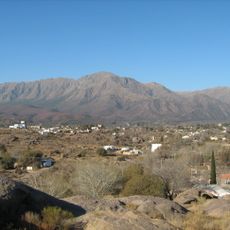
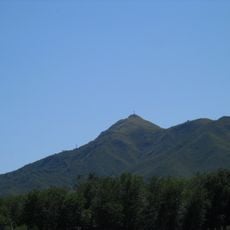
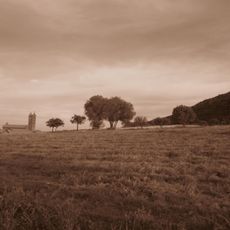
The Sierras de Ambargasta is a mountain range in the centre-north of Argentina, in southern Santiago del Estero and northern Córdoba provinces. It belongs to the northern Sierras Pampeanas and rises from the flat, silty-loessic Chacopampean plain, with a maximum height of about 500 metres above sea level. The range is made up of low ridges of pink granitoids poor in biotite, and its highest point in the Santiago del Estero sector is Cerro Negro, at 500 metres.
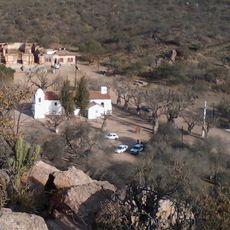
In 1997, Santiago del Estero provincial law No. 6381, under law No. 5787, created the Reserva Provincial de Uso Múltiple Sierras de Ambargasta. The reserve is largely nominal: its territory has a complex cadastral situation, and numerous families have occupied most of the protected area since viceregal times. These residents have cleared timber species and kept goats, which reach trees, branches and ledges, leaving few microhabitats untouched.
The name Ambargasta comes from the Salinas de Ambargasta, the salt flats bordering the range to the west. Since viceregal times families have occupied the protected area, keeping goats that climb trees and ledges to reach browse, and hunting wildlife for food or to remove predators of their herds.
The area has a continental subtropical climate with a dry season from May through October and a wetter period from November to April. Visitors should prepare for large temperature swings between day and night and pack accordingly depending on the season.
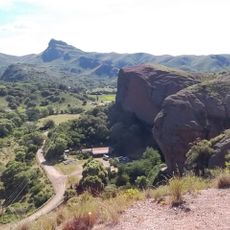
The mountains are composed of pink granitoids with low biotite content, formed during a magmatic arc in the Early Paleozoic period. This geological makeup is relatively rare and draws the interest of scientists and geology enthusiasts visiting the region.
The community of curious travelers
AroundUs brings together thousands of curated places, local tips, and hidden gems, enriched daily by 94,611 contributors worldwide.