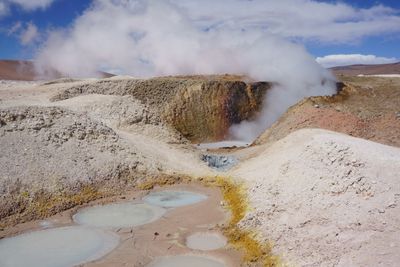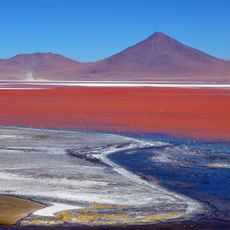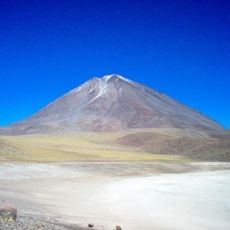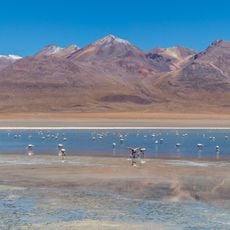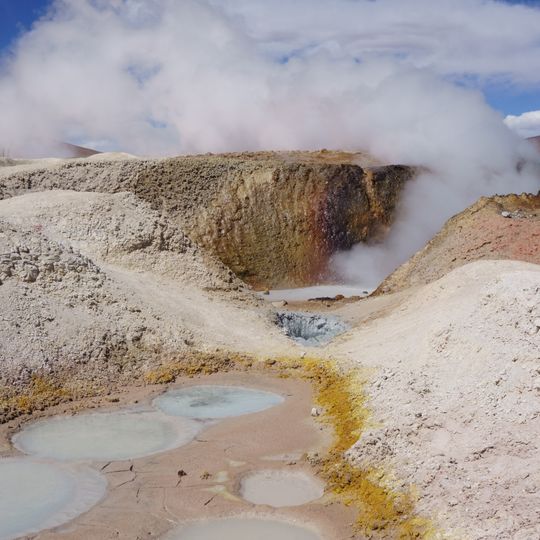
Sol de Mañana, Geothermal field in Potosí Department, Bolivia
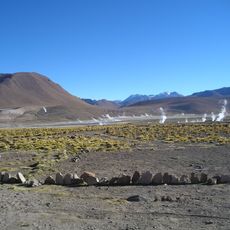
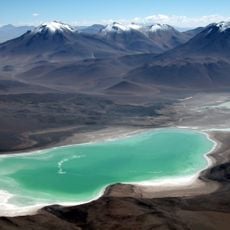
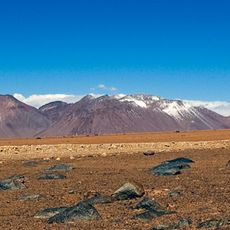
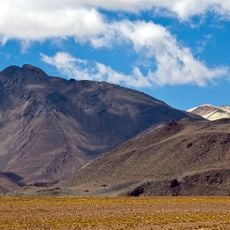
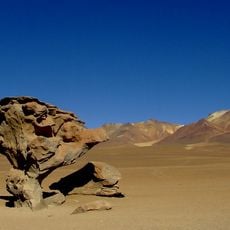
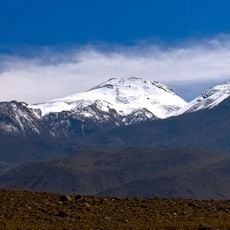
Sol de Mañana is a geothermal field in the highlands of the Potosí Department in Bolivia, where steam vents, mud pools, and fumaroles cover a wide stretch of open ground. The site sits at around 16,400 feet (5,000 meters) above sea level, making it one of the highest geothermal areas in the world.
After the energy crisis of the 1970s, Bolivia began studying the geothermal potential here as a way to reduce dependence on fossil fuels. Those early investigations drew scientific attention to the area and laid the groundwork for later research projects.
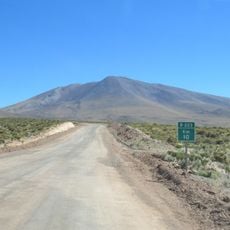
Sol de Mañana is one of the main stops on the unpaved Uyuni–Antofagasta route through the Eduardo Avaroa Andean Fauna National Reserve, and the reserve's name honours Eduardo Abaroa, the Bolivian hero of the 1879 Pacific War. The nearest settlements, Quetena Grande and Quetena Chico, lie 75 km northeast and are the usual base for local guides. Visitors walk a marked circuit past the mud pools and fumaroles, keeping to the paths because the crust between vents is thin.
A local guide is necessary to move safely around the site, as the ground can be unstable and hazards are not always visible. Visitors should dress warmly, since the altitude means temperatures stay low even on sunny days.
The name Sol de Mañana means 'morning sun' in Spanish, and early morning is indeed when the steam rising from the vents stands out most clearly against the cold air. Arriving at dawn gives a very different experience from a midday visit, when sunlight changes how the vapors appear.
The community of curious travelers
AroundUs brings together thousands of curated places, local tips, and hidden gems, enriched daily by 92,816 contributors worldwide.