Olympic Aquatics Stadium, Swimming center in Barra da Tijuca, Brazil
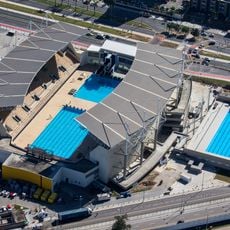
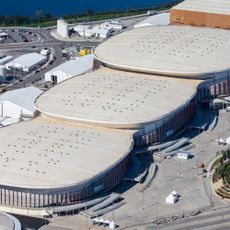
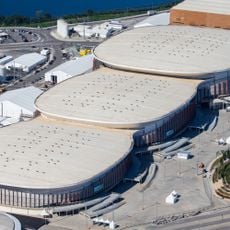
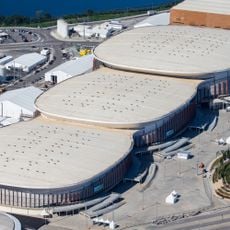
The Olympic Aquatics Stadium was a temporary aquatics center in Barra Olympic Park, Barra da Tijuca, built around an Olympic pool and a second warm-up pool outside, both made by the Italian firm Myrtha Pools. Its exterior carried art by Brazilian artist Adriana Varejão. The stands held 18,000 people, and the whole structure was designed to be taken apart after the Games.
Construction began in 2013 at a cost of about 217.1 million reais, and the venue hosted the 2016 Olympic swimming events, the synchronized swimming finals and the water polo finals, plus para-swimming at the Paralympics. Planned as temporary nomadic architecture, it was fully dismantled by 2024; its pools went to projects around Rio, and in 2022 parts of the structure were donated to Bangu Atlético Clube and the Lins Imperial samba school.
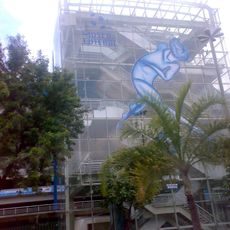
The stadium's exterior carried artwork by Brazilian artist Adriana Varejão, a Rio-born painter known for tile and baroque imagery. It was one of the few decorative elements on a building designed to be taken apart: the structure was nomadic architecture, and after the 2016 Games its parts went to Bangu Atlético Clube's Moça Bonita stadium and to the Lins Imperial samba school.
The stadium no longer exists: it was fully dismantled in 2024, so there is nothing to visit at the Barra Olympic Park site. Its main pool was moved to Parque Oeste Ana Gonzaga in 2026, and other parts went to Bangu Atlético Clube and a samba school in Lins de Vasconcelos.
The stadium was built as temporary architecture, like the neighbouring Future Arena, and was fully dismantled by 2024. Its parts went to Bangu Atlético Clube for the Moça Bonita stadium and to the Lins Imperial samba school; the main pool was moved to Parque Oeste Ana Gonzaga in 2026.
The community of curious travelers
AroundUs brings together thousands of curated places, local tips, and hidden gems, enriched daily by 94,540 contributors worldwide.