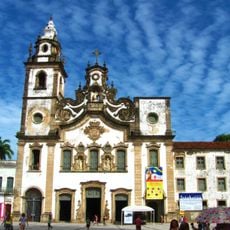
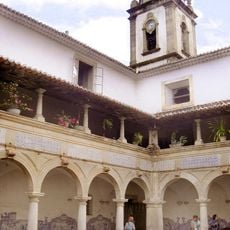
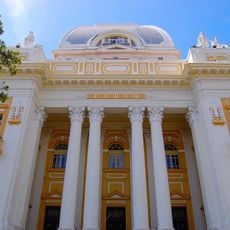
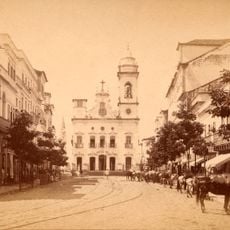
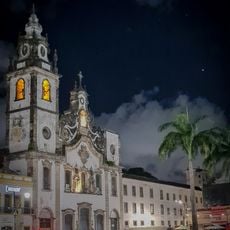
Church of Our Lady of the Rosary of Saint Antony of the Black People, Colonial church in Santo Antonio district, Recife, Brazil.
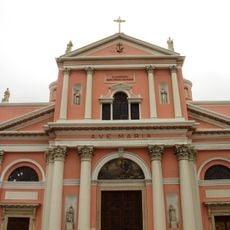
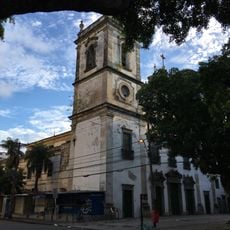
The Church of Our Lady of the Rosary of Saint Antony of the Black People is a colonial church building in the Santo Antonio district, distinguished by its symmetrical facade, dual bell towers, and carved stonework framing the entrance. The interior showcases neoclassical altars and expansive painted murals that cover the walls from floor to ceiling.
The Brotherhood of Our Lady of the Rosary of the Black Men of Recife was founded in 1654, after the Dutch were expelled from Pernambuco. Around eight years later the brothers bought land in Santo Antônio and built the first church between 1662 and 1667, during the reign of D. Afonso VI of Portugal. The present appearance dates from the 18th century, with the last major renovation in 1777.
The church belongs to the Confraria de Nossa Senhora do Rosário dos Homens Pretos de Santo Antônio, founded in 1654, the second-oldest black brotherhood in Brazil after Olinda's. The transversal street beside it is named Rua Estreita do Rosário and the one in front Rua Larga do Rosário. Devotion to Our Lady of the Rosary was brought to enslaved Africans by the Jesuits.
The church is located in the Santo Antonio neighborhood and welcomes visitors on weekdays for tours and services. Arriving in the morning offers better light for viewing the interior decorations and artwork.
In the 1950s IPHAN tried to strip layers of paint from the altars; the removal took off the original layers too, leaving the bare wood seen today. Payment books from the 18th century show the altars were originally polychromed and gilded. Most of the original statues are now in IPHAN custody, so few black saints remain on the altar.
The community of curious travelers
AroundUs brings together thousands of curated places, local tips, and hidden gems, enriched daily by 92,874 contributors worldwide.