Ponte Santa Isabel, Road bridge in Recife, Brazil
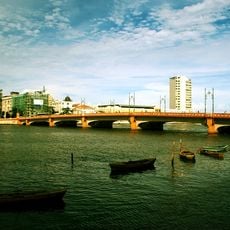
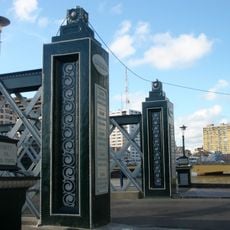
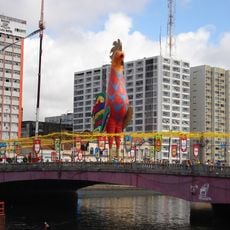
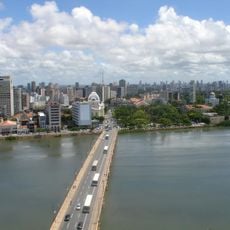
The Ponte Santa Isabel is one of Recife's urban bridges over the Capibaribe River, the last crossing before the Capibaribe joins the Beberibe, behind the Palácio do Campo das Princesas. Its original design was by French engineer Louis Léger Vauthier and it was built by English engineer William Martineau; it was Recife's first iron bridge.
Designed by the French engineer Louis Léger Vauthier and built under the English engineer William Martineau, the Ponte Santa Isabel opened on 2 December 1863 as the first iron bridge in Recife. It was rebuilt in 1913 during the government of Dantas Barreto, and restructured in 1967 under Mayor Augusto Lucena after damage from the Capibaribe floods of 1965 and 1966.
The bridge's name honours Santa Isabel, the patroness invoked in Recife's devotion, and it stands as the last crossing of the Capibaribe before that river joins the Beberibe behind the Palácio do Campo das Princesas. Its iron structure, the first of its kind in the city, has been part of the daily route between the two banks since 1863.
The Ponte Santa Isabel is the last bridge over the Capibaribe before its junction with the Beberibe, which lies behind the Palácio do Campo das Princesas; the bridge itself stands upstream of that point. It carries road traffic between the two banks, so cross on foot via the side walkways and keep to them while vehicles pass.
Severe floods in the 1960s caused major damage to the bridge, leading to its complete reconstruction in 1967 under Mayor Augusto Lucena's leadership. This rebuilding effort demonstrated the city's commitment to restoring and reinforcing its critical infrastructure.
The community of curious travelers
AroundUs brings together thousands of curated places, local tips, and hidden gems, enriched daily by 92,814 contributors worldwide.