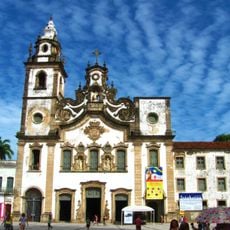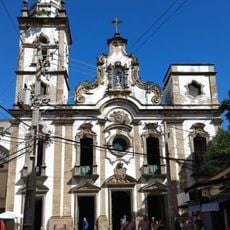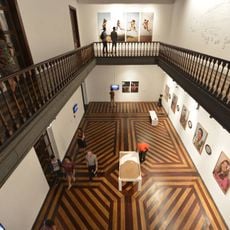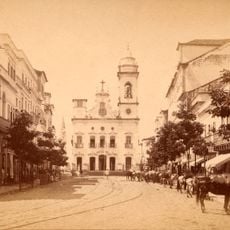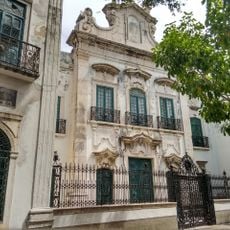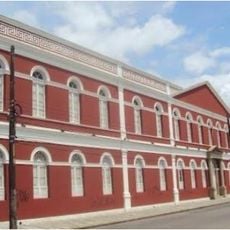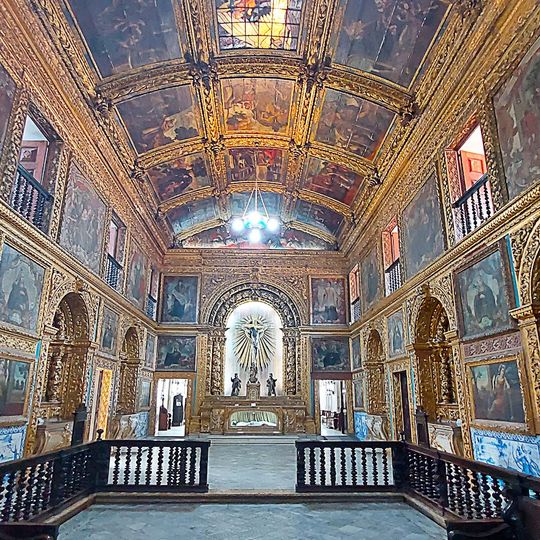
Capela Dourada, Religious chapel in Santo Antônio neighborhood, Recife, Brazil.
This Franciscan chapel features an interior completely covered with gold leaf applied over carved cedar wood reliefs, creating an ornate baroque ensemble that exemplifies the wealthy artistic expression of 18th-century colonial Brazil through intricate religious craftsmanship.
The cornerstone was laid on 13 May 1696 by Captain General Caetano de Melo Castro, with Portuguese Captain Antônio Fernandes de Matos as master builder. The chapel opened for public mass on 15 September 1697, presided over by Commissary Visitor Friar Jerônimo da Ressurreição, though work continued until 1724. The main chapel was carved by Antônio Martins Santiago in 1698 and gilded by Manuel de Jesus Pinto in 1799.
Portuguese azulejo panels adorn the side walls depicting saints and allegorical figures representing virtues such as Faith, Hope, and Charity, demonstrating the fusion between European artistic traditions and Brazilian colonial religious expression within Franciscan spiritual practices.
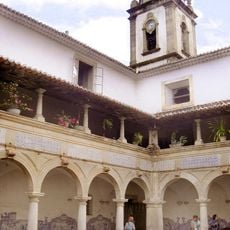
The chapel sits inside the Convent and Church of Santo Antônio complex, reached through the Church of the Third Order of St. Francis; the sacristy, with its 1762 rosewood furniture, lies beyond the main chapel. Visitors should allow time for the adjoining Franciscan Museum of Religious Art, and note that the space is an active place of worship, so access may pause during Masses and liturgical celebrations.
The sacristy preserves furniture carved in rosewood from 1762 and a marble washbasin imported from Estremoz, Portugal, showcasing the luxury and refinement that characterized Franciscan spaces during the colonial period in northeastern Brazil.
The community of curious travelers
AroundUs brings together thousands of curated places, local tips, and hidden gems, enriched daily by 94,514 contributors worldwide.