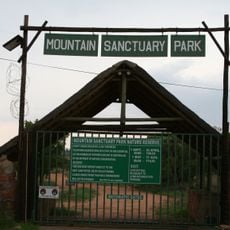
Pilanesberg National Park, Game reserve in North West Province, South Africa.
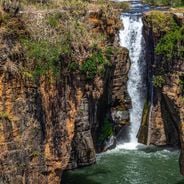
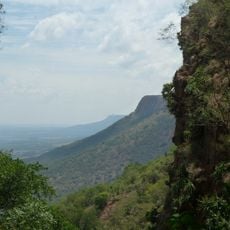
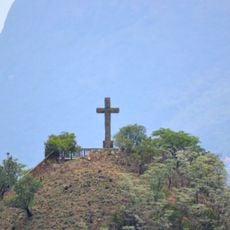
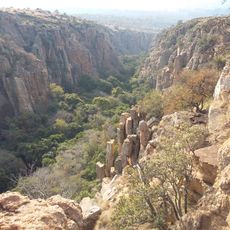
Pilanesberg National Park is a game reserve of about 55,000 hectares around the 1,687-metre extinct volcano Pilanesberg, roughly 150 km northwest of Johannesburg. Its alkaline ring complex consists of three concentric rings of hills, about 25 km across, formed when magma intruded and the crust subsided after eruptions around 1,300 million years ago. The surrounding plains belong to the Bushveld Complex.
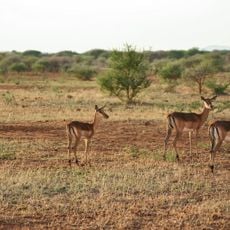
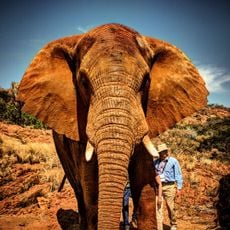
The park opened in December 1979 in the then formally independent Bophuthatswana, on land that had belonged to the Tswana. Its founding was tied to Operation Genesis, the largest animal relocation programme of its time: over 7,000 animals were moved in from other parks in southern Africa.
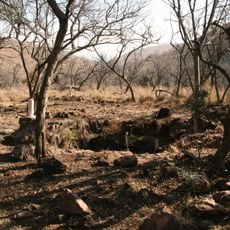
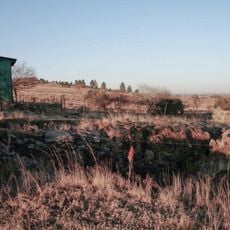
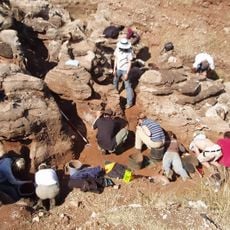
The park is named after Pilane, a Kgafêla chief who ruled from Bogopane, Mmamodimokwana and Mmasebudule in the 1800s. Scattered across the reserve are Iron Age and Stone Age sites that show human activity long before the park existed.
The park covers 572 square kilometres and has 188 kilometres of maintained tracks, including three tarred roads named Kgabo, Kubu and Tshwane, so it can be explored in a standard road vehicle. The Pilanesberg International Airport (NTY) lies on the south-eastern edge and handles about 40,000 passengers a year.
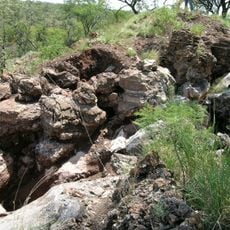
The ring complex is not a crater but a structure of three concentric rings that cracked the surface before eruptions around 1,300 million years ago; the crust then sank into the cavities and magma solidified into the hills that dominate the landscape. Orthoclase and nepheline are common here, and the complex carries zirconium, niobium, tantalum and rare-earth metals.
The community of curious travelers
AroundUs brings together thousands of curated places, local tips, and hidden gems, enriched daily by 93,141 contributors worldwide.