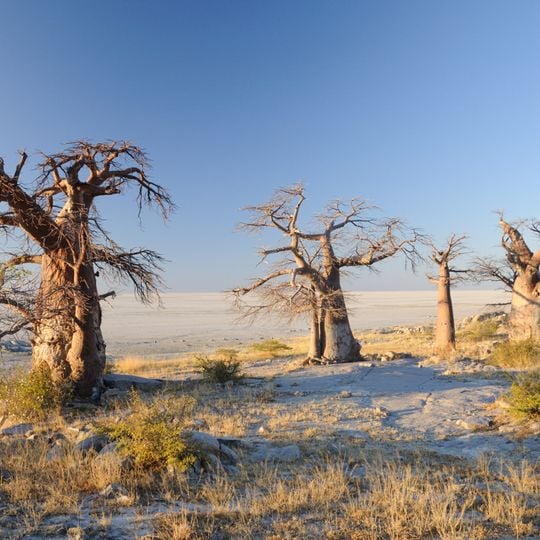
Kubu Island, Granite rock hill and archaeological site in Makgadikgadi Pan, Botswana.
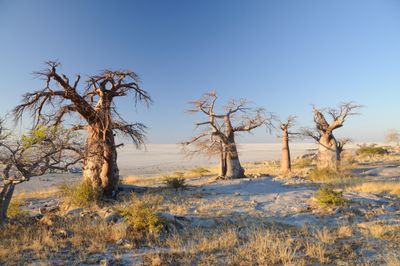
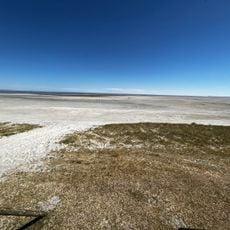
Kubu Island is a granite formation rising within the expansive salt flats of Makgadikgadi Pan, featuring ancient stone walls and circular stone cairns. The rock covers a significant area and displays remains of human habitation spread from the formation itself to the surrounding areas.
The site shows evidence of human presence during prehistoric times, with stone tools and structures pointing to early settlement. These findings help researchers understand how people lived and survived in this extreme environment.
The name Kubu comes from the Kalanga word meaning large rock or the Tswana word for hippopotamus, reflecting the language diversity of the region. Visitors can see how this naming connects to the landscape, with the massive granite outcrop rising visibly above the surrounding salt pans.
The site is best visited during the dry season when the salt pans are passable and conditions are safest. Bring plenty of water, sun protection, and sturdy footwear, as the terrain is hard and uneven.
The site contains numerous circular stone cairns and walls of varying heights scattered across the rock formation. Researchers suspect these structures served ritual or astronomical purposes, yet remain uncertain about their exact function.
The community of curious travelers
AroundUs brings together thousands of curated places, local tips, and hidden gems, enriched daily by 91,698 contributors worldwide.