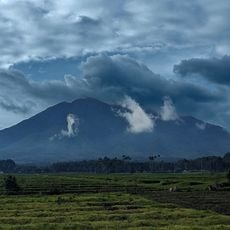
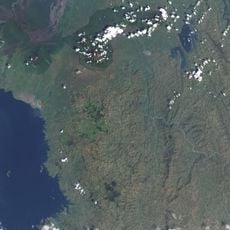
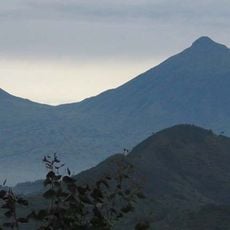
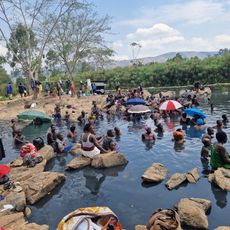
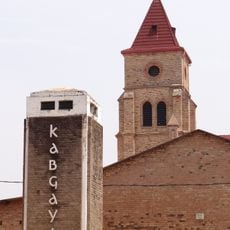
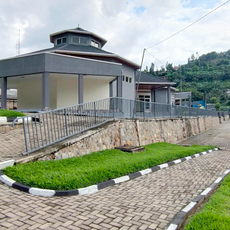
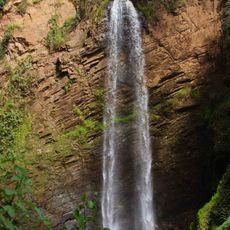
Lake Bunyonyi, Volcanic lake in Western Region, Uganda.
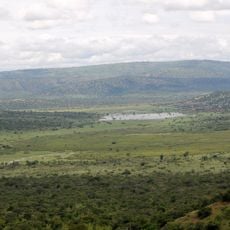
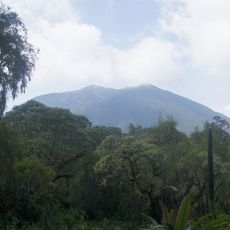
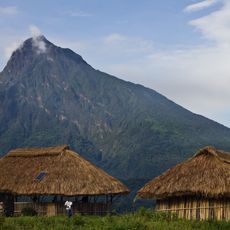
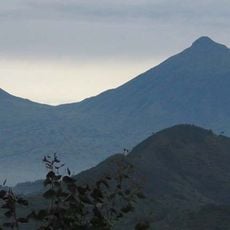
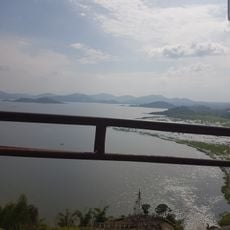
Lake Bunyonyi is a volcanic lake in Uganda's Western Region dotted with around 29 islands across its waters. The lake sits at 1,962 meters (6,437 feet) elevation and stretches roughly 25 kilometers (16 miles) long and 7 kilometers (4 miles) wide.
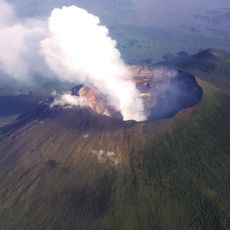
Lake Bunyonyi formed about 18,000 years ago when a volcanic eruption blocked a valley in the Rukiga mountains near the present-day village of Muko, at the lake's north-west tip. Its outlet is a small stream in Muko that flows into the Ruvuma swamp, then the Ruhezaminda river and Lake Mutanda. In 1931, English missionary Leonard Sharp established a leprosy treatment centre on Bwama island.
The Bakiga left unmarried pregnant girls on Akampene, a tiny island with a single tree, to die of hunger or drown swimming to the mainland; a man without cows for bride price could collect a girl there. The practice was abandoned in the first half of the 20th century. Bufuka village now offers Batwa and Bakiga experiences.
To reach the lake, visitors travel through Kabale town, which has connections to the capital, then continue by taxi to the shoreline. It helps to prepare for elevation changes and plan the journey from the capital in advance.
Lake Bunyonyi appeared on Uganda's 5,000-shilling note from 2004 to 2009, captioned "Lake Bunyonyi and terraces". The lake also holds four endemic species of Caridina shrimp, and the De Witte's clawed frog is the only native vertebrate still common in its water.
The community of curious travelers
AroundUs brings together thousands of curated places, local tips, and hidden gems, enriched daily by 93,188 contributors worldwide.