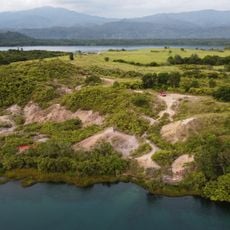
Hulubelu, Stratovolcano in South-Eastern Sumatra, Indonesia.
Hulubelu is a stratovolcano in southeastern Sumatra with an elliptical summit caldera ringed by steep walls. The surrounding slopes reveal active geothermal features including steam vents, mud pools, and bubbling springs across the volcanic landscape.
The volcano developed through multiple eruptions, with its most recent recorded activity occurring in 1836. This event shaped the central cones and flank structures visible in the landscape today.
Local Indonesian communities near Hulubelu utilize the fertile volcanic soil for agricultural activities, adapting their farming methods to the geological environment.
The area displays diverse geological phenomena spread throughout the volcanic region that visitors can observe directly. Expect uneven terrain and approach active thermal areas with care to avoid hot vents and unstable ground.
The thermal zones lying northeast of the caldera align parallel to the Great Sumatran fault, a massive tectonic line running across the entire island. This alignment reveals how the volcano's activity connects to the deep structural forces shaping the region.
The community of curious travelers
AroundUs brings together thousands of curated places, local tips, and hidden gems, enriched daily by 91,795 contributors worldwide.