Grave of Sukarno, Mausoleum of Sukarno in Blitar, East Java, Indonesia
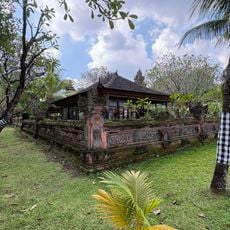
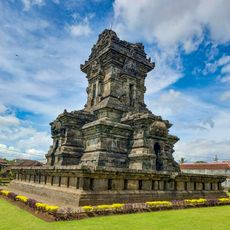
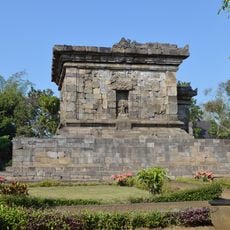
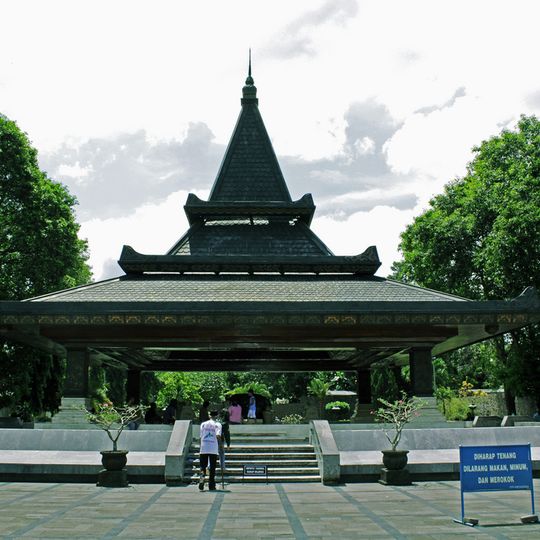
The Grave of Sukarno lies within a 1.8-hectare complex in Blitar divided into courtyard, terrace and mausoleum, reflecting Javanese stages of life. The mausoleum has a three-tiered copper roof of Javanese design about 16 metres tall, and Sukarno's grave sits beside his parents' graves with a black marble epitaph behind the headstone.
Sukarno died on 21 June 1970 and was buried in a public cemetery in Blitar beside his mother, Ida Ayu Nyoman Rai, despite his wish for a simple grave near Bogor Palace. In 1979 Suharto dedicated a mausoleum over the grave before about one million attendees; Sukarno's son Guntur said the family was not consulted. Visits reached 1.4 million in 1980.
Muslim pilgrims, mainly Javanese, visit to seek Sukarno's spiritual blessing, following the Javanese tradition of visiting graves of revered figures such as the Wali Sanga. Every 18 September, the Commander of the Indonesian National Armed Forces leads a pilgrimage on the TNI anniversary. Politicians also come before elections, including Megawati in 2004, Joko Widodo in 2014 and Prabowo Subianto in 2019.
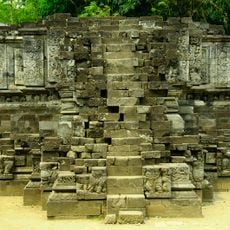
The complex covers 1.8 hectares and is divided into courtyard, terrace and mausoleum, mirroring Javanese life stages. A light-stone staircase leads up to the pendopo; a sign at its base asks visitors to remain quiet and not eat, drink or smoke. The mausoleum stands about 15–16 metres tall.
The mausoleum was dedicated in 1979 on the ninth anniversary of Sukarno's death, in a ceremony attended by about one million people. His son Guntur criticised the project, saying the family was not consulted about its construction.
The community of curious travelers
AroundUs brings together thousands of curated places, local tips, and hidden gems, enriched daily by 93,179 contributors worldwide.