Pegulingan Temple, Buddhist-Hindu temple in Tampaksiring, Indonesia
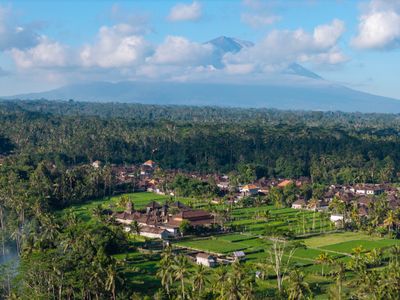
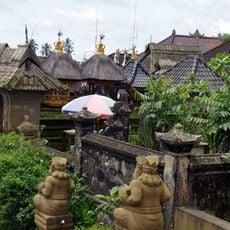
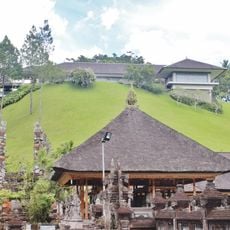
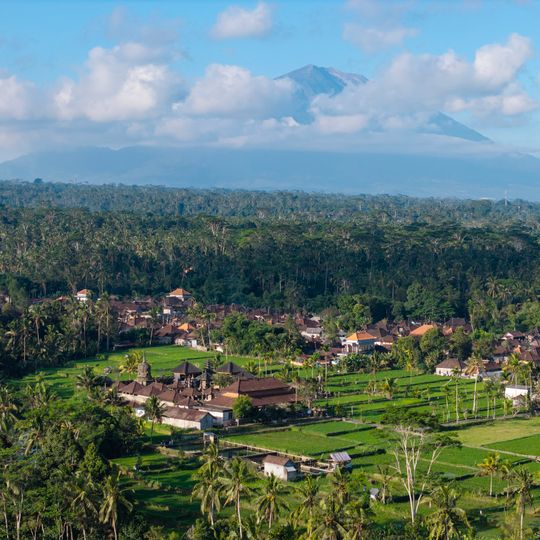
Pegulingan Temple stands inside the Pura Pegulingan compound among rice fields, about 250 m by footpath from Balai Banjar Basangambu. Its main structure is a dark stone and brick tower with a square stepped base and receding tiered roofs ending in a pointed finial, set at the front of the complex. Behind and around it are smaller shrines and pavilions with reddish-brown tiered roofs, some raised on stone bases, within low enclosing walls.
Pegulingan Temple is attributed by the Lontar Usana Bali to the reign of King Masula Masuli, in the 11th century CE (Caka 1178). The site was rediscovered in 1982, when villagers digging for a Padmasana unearthed four damaged padas-stone Buddha figures, clay seals bearing a Sanskrit Ye-Te formula, a bronze bowl with inscribed gold and silver plates, and a miniature stupa whose elephant-and-gateway relief gives the Saka year 898 (976 CE). In 2012 the complex was included in Bali's cultural landscape.
The temple functions as a shared space where Buddhist and Hindu priests perform ceremonies together, reflecting how different faiths coexist in the local area. Visitors can witness these rituals throughout the year, seeing firsthand how religious practices blend in daily worship.
From Balai Banjar Basangambu, turn left and follow a footpath about 250 metres to Pura Pegulingan. The temple lies east of Tirta Empul in the rice fields at 551 metres above sea level; the Istana Tampaksiring is visible to the west.
An octagonal sandstone box found beneath the foundation held gold plates and a tiny stupa containing a Buddha figure, revealing how early visitors left their most precious possessions at this spot. These hidden treasures offer insight into ancient offering practices that would otherwise remain unknown.
The community of curious travelers
AroundUs brings together thousands of curated places, local tips, and hidden gems, enriched daily by 94,749 contributors worldwide.