Kertha Gosa Pavilion, Historical pavilion in Semarapura, Indonesia
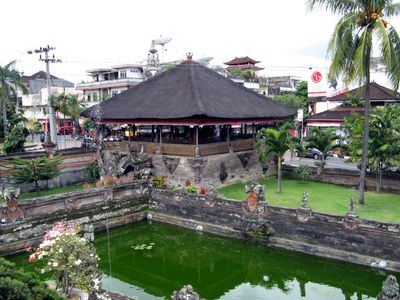
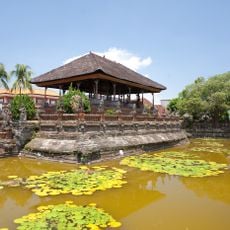
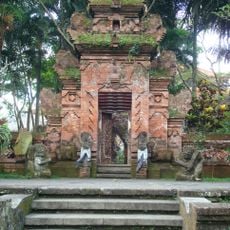
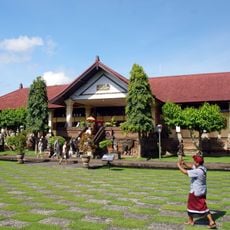
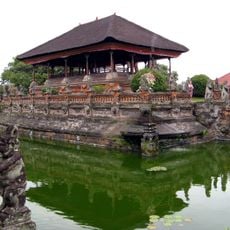
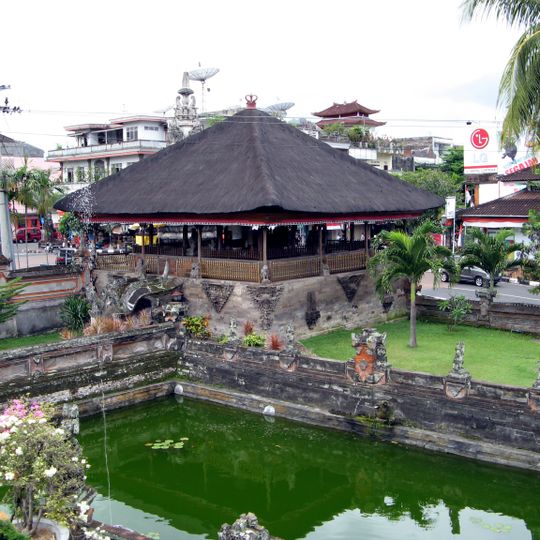
The Kertha Gosa Pavilion is a raised, open-sided structure within the Klungkung Palace complex in Semarapura, Bali, once used as a court of justice and now known above all for its fully painted ceiling. The ceiling is covered in concentric rings of painted panels that fill the entire overhead surface from edge to center.
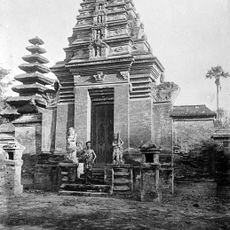
The pavilion was built in 1686 by I Dewa Agung Jambe, the founder of the Klungkung Kingdom, as the main seat of justice on Bali. After Dutch colonial rule took hold in the early 20th century and a major earthquake struck in 1917, the ceiling paintings were restored and partly reworked.
The ceiling paintings follow the Kamasan style, a local tradition from the nearby village of Kamasan, where flat figures are drawn in ochre, black, and red tones against a pale background. Visitors who look closely can make out scenes from the Mahabharata and Ramayana, which once helped explain moral principles to those attending court.
The pavilion is part of the Taman Gili complex, which charges an entry fee. Going early in the morning means fewer people and softer light that makes it easier to look up at the painted ceiling without discomfort.
Each chair placed in the pavilion during court sessions bore a carved animal symbol that showed the rank of whoever sat there, with a lion for the king, a bull for priests, and a dragon for officials. This meant that the entire hierarchy of the court was visible at a glance, without a word being spoken.
The community of curious travelers
AroundUs brings together thousands of curated places, local tips, and hidden gems, enriched daily by 92,850 contributors worldwide.