Pura Beji Sangsit, Hindu temple in Sangsit, Indonesia
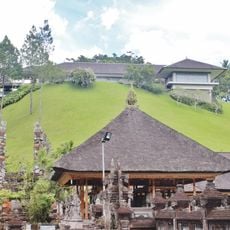
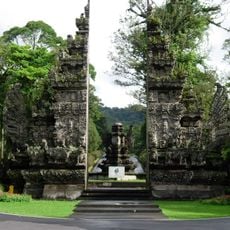
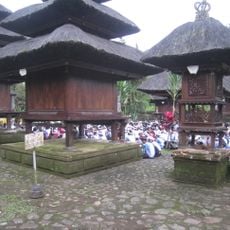
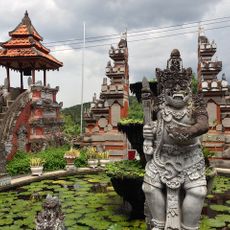
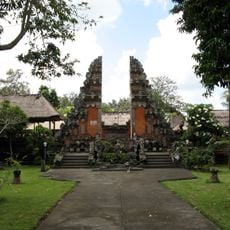
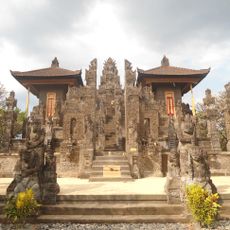
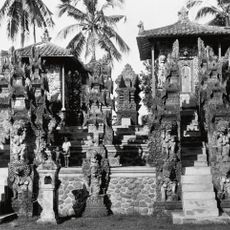
Pura Beji Sangsit is a Balinese temple in Sangsit, Buleleng, about 8 km east of Singaraja. Its shrine bases and surrounding walls are built of white sandstone covered in foliage-like carvings of vines and flowers, a feature found only in northern Bali. The compound has three areas: the outer jaba pisan with the bale kulkul, the middle jaba tengah entered through a heavily carved candi bentar split gate, and the inner jero reached by a large paduraksa portal topped with bhoma heads.
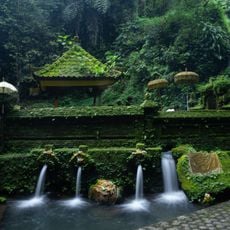
Pura Beji dates from the 15th century, when Brahmins arrived in Bali from the Hindu Majapahit Kingdom of Java; the village was then called Beji. It was built during the reign of Pasek Sakti Batu Lepang, with Truna Pesaren as architect and pengempon. A former pond fed by an ancient well was found on its east side, and farmers revere it as Pura Subak Beji. It has been restored several times, keeping its original style.
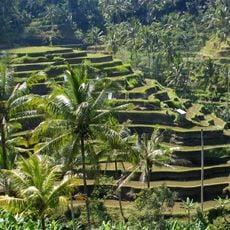
The temple serves as a subak shrine dedicated to Dewi Sri, the goddess of rice. Local farmers come here regularly to seek blessings for their paddies, keeping daily spiritual life closely tied to the land.
Visitors must wear a sarong covering the knees and shoulders, and one may sometimes be borrowed at the entrance. Daylight visits work best, as the natural light brings out the details in the carvings along the walls and gates.
The aling-aling barrier inside the temple carries carved figures of Dutch musicians playing string instruments. These figures show how encounters with the colonial period found their way directly into local stonework.
The community of curious travelers
AroundUs brings together thousands of curated places, local tips, and hidden gems, enriched daily by 94,004 contributors worldwide.