Pura Meduwe Karang, Agricultural temple in Kubutambahan, Indonesia
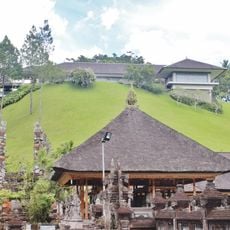
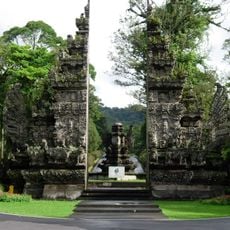
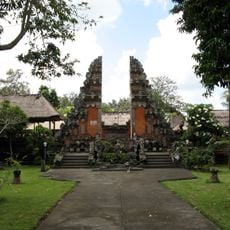
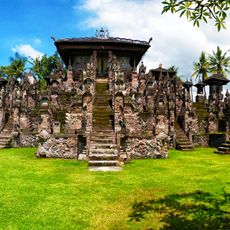
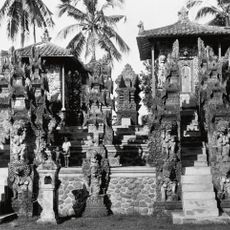
Pura Meduwe Karang is an agricultural temple located in Kubutambahan that protects crops and harvests. The complex has three distinct courtyards linked by stone gateways, with elaborate carvings decorating the perimeter walls.
Pura Meduwe Karang was built in 1890 by people who came to Kubutambahan from the extinct village of Bulian. It is dedicated to Batara Meduwe Karang, a god protecting the fertility of agricultural land, and also has shrines to the sun god Surya and to Mother Earth. The man-on-bicycle relief was badly damaged in the 1917 earthquake and altered during restoration, which added more floral decoration to the original bas-relief.
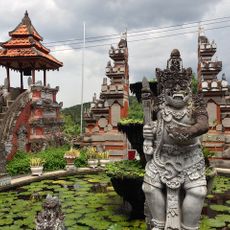
At the entrance, 36 stone figures from the Ramayana stand on three levels: 13 in the lowest row, ten in the middle and 13 at the back. Kumbhakarna is the central figure, surrounded by the monkey troops of Sugriwa. Twin staircases flank the group, leading up to the jaba pura terrace.
The temple lies in Kubutambahan, about 12 km east of Singaraja on northern Bali's coastal road. Entry passes through a parade of 36 Ramayana figures set on three levels, flanked by twin staircases that lead up to the outer terrace. The grounds are walked on foot through successive split gateways, from the outer courtyard to the inner sanctum.
The cyclist relief on the main shrine depicts Dutch artist W.O.J. Nieuwenkamp, who toured Bali by bicycle in 1904. Badly damaged in the 1917 earthquake, it was altered during restoration, which added floral ornament to the original bas-relief.
The community of curious travelers
AroundUs brings together thousands of curated places, local tips, and hidden gems, enriched daily by 94,600 contributors worldwide.