Honeysuckle Creek Tracking Station, Space tracking station in Tennent, Australia
Honeysuckle Creek Tracking Station is a space communication facility in the Australian Capital Territory that operated between 1967 and 1981. It housed a 26-meter antenna and supporting equipment used to send commands and receive data from spacecraft during NASA missions.
The station opened in 1967 and became crucial during the Apollo 11 mission when it transmitted the first images of Neil Armstrong on the Moon in July 1969. It was one of three global locations needed to maintain continuous contact with spacecraft as they orbited and landed.
The station embodies Australian-American scientific partnership and shows how the country played a key role in space exploration. Local teams worked alongside NASA staff to track and communicate with missions far from Earth.
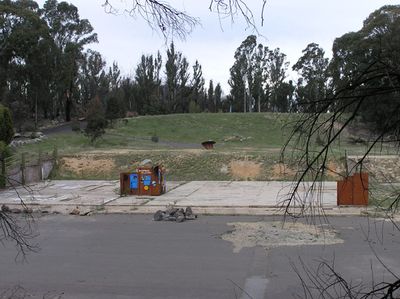
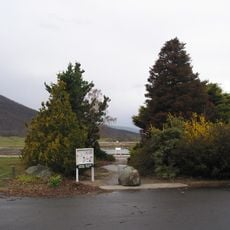
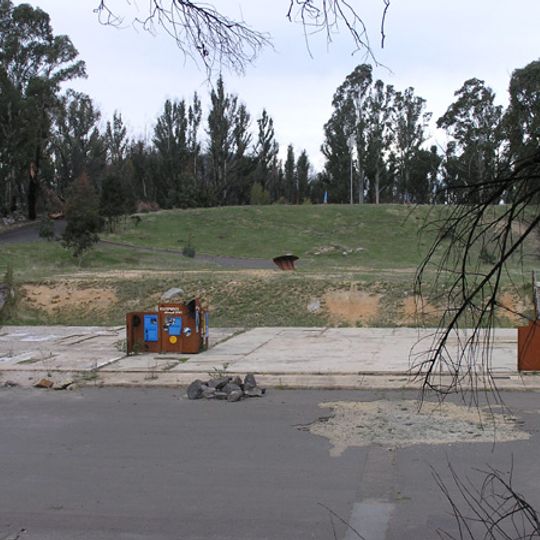
Visitors can explore the concrete foundations that remain and information boards describing the station's role in space communications. The site is open and walkable, with room to move around the grounds at your own pace.
The station was strategically positioned so that together with two other tracking sites it provided round-the-clock coverage of spacecraft. Without these three points working in coordination, losing contact with astronauts on the Moon would have been unavoidable.
The community of curious travelers
AroundUs brings together thousands of curated places, local tips, and hidden gems, enriched daily by 91,840 contributors worldwide.