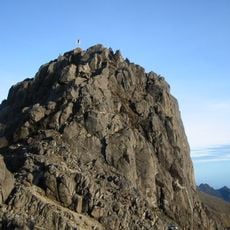
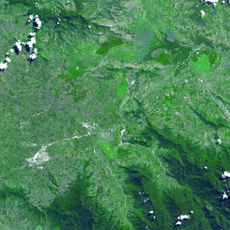
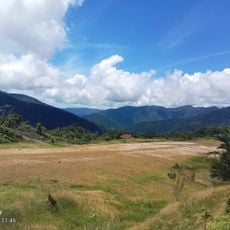
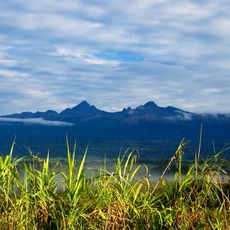
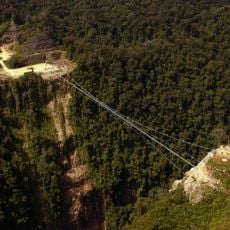
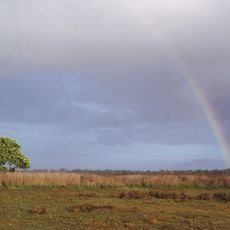
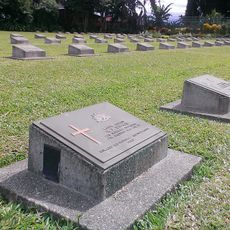
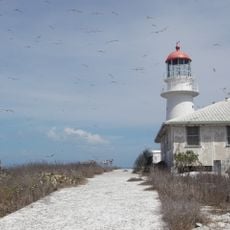
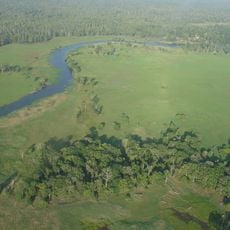
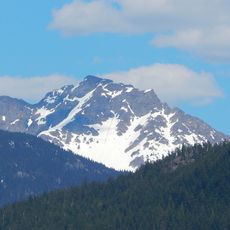
Mount Bosavi, Extinct volcano summit in Southern Highlands Province, Papua New Guinea.
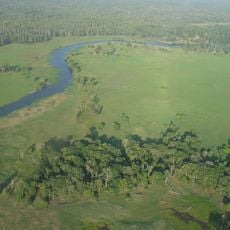
Mount Bosavi is an extinct volcano in Papua New Guinea that rises approximately 2,500 meters above sea level. The mountain features a massive crater that is several kilometers wide and roughly 1 kilometer deep.
Mount Bosavi is the collapsed cone of an extinct volcano that was active during the Pleistocene. Its last eruption is dated either to about 200,000 or about 500,000 years ago, depending on the source. In 2006 part of the mountain was included in the Sulamesi Wildlife Management Area, and it now forms part of the proposed UNESCO World Heritage Site Kikori River Basin/Great Papuan Plateau.
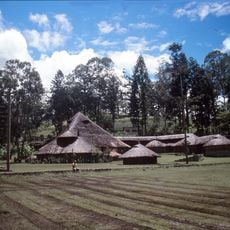
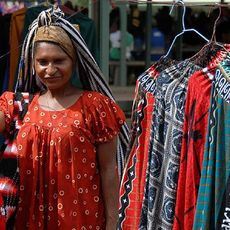
The people just north of the mountain call themselves Bosavi kalu, "people of Bosavi", and split into four groups: Kaluli, Ologo, Walulu and Wisesi. They share one culture but speak distinct languages. The Kaluli in particular became known to anthropologists through the work of Edward Schieffelin, who studied their longhouse life and ritual in the 1960s and 1970s.
Reaching this location requires significant preparation because of its remote setting and limited facilities in the surrounding region. It is advisable to hire local guides and arrange transport well in advance.
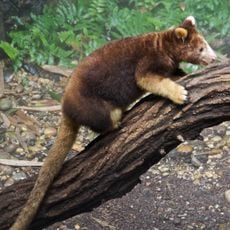
A 2009 scientific expedition found over 40 previously unknown animal species in the area, including a rodent species notably larger than typical rats. These discoveries highlight how isolated this region remains and how much about the local wildlife remains unexplored.
The community of curious travelers
AroundUs brings together thousands of curated places, local tips, and hidden gems, enriched daily by 94,122 contributors worldwide.