Kuk Swamp, Archaeological site in Western Highlands Province, Papua New Guinea.
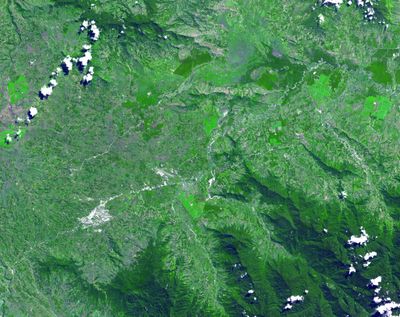
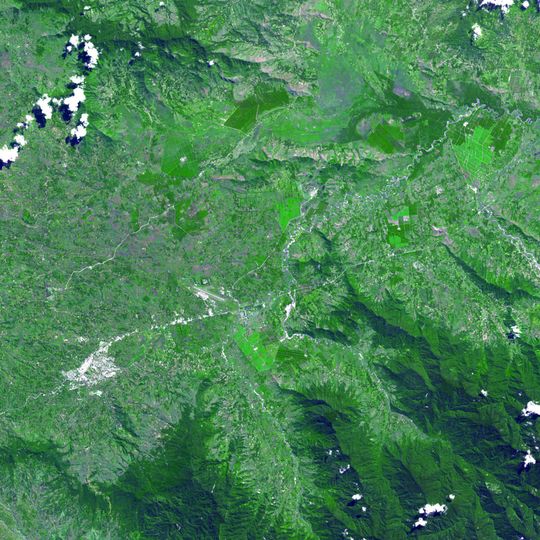
Kuk Swamp lies in a former lake basin in the Wahgi Valley at about 1,550 metres, 12–13 km northeast of Mount Hagen. Its flat, rectangular plots are cut by a pale winding channel, with further plot groups to the upper left and right, bordered by ridged green ground. Excavations by Jack Golson from the 1960s revealed drainage ditches in three classes: major disposal channels, large field ditches and small field ditches.
Drainage ditches at Kuk Swamp date to about 9,000 years ago, when people cut channels to keep water off the fan and turn the ground into grassland for taro. Banana and sugar cane cultivation is dated to 6,900–6,400 years ago. Australian archaeologist Jack Golson led excavations from the 1960s, and UNESCO listed the site in 2008.
The Kawelka, a Melpa-speaking people, live in the Kuk Swamp area today and since the 1990s have grown sweet potato, bananas and coffee there. Excavations led by Australian archaeologist Jack Golson from the 1960s recovered wooden digging sticks and a grindstone from the drainage channels, showing how the ditches were cut and maintained.
The site lies in the Wahgi Valley at about 1,550 m, 12–13 km northeast of Mount Hagen, and covers 116 hectares of wet grassland crossed by old ditches. Access is via rough tracks from the Highlands Highway side; expect mud and standing water in the drains. The Kawelka community lives and farms on the land, so ask locally before walking across cultivated plots.
Microscopic plant remains of bananas were discovered at the site, indicating that people here practiced one of the earliest deliberate cultivation efforts of this crop. This finding suggests residents were experimenting with food crops and actively selecting plants to grow.
The community of curious travelers
AroundUs brings together thousands of curated places, local tips, and hidden gems, enriched daily by 92,767 contributors worldwide.