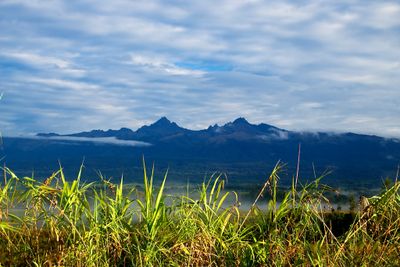
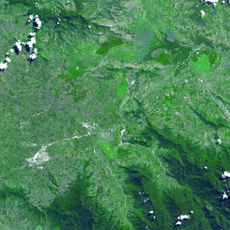
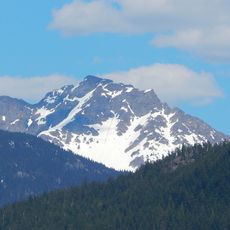
Mount Giluwe, Dormant volcano in Southern Highlands, Papua New Guinea.
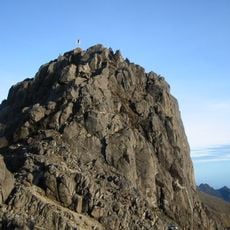
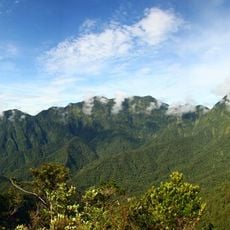
Mount Giluwe is an old shield volcano in the Southern Highlands of Papua New Guinea, reaching 4,367 metres. Its two summits are eroded volcanic plugs: the central peak is the highest, and the west peak lies about 2 kilometres away at 4,300 metres. The upper slopes above roughly 3,400 metres form a broad alpine grassland plateau with tarns, cushion plants and mosses.
The original stratovolcano at Giluwe formed 650,000–800,000 years ago. Pleistocene glaciation eroded it, leaving the volcanic plugs that form today's two summits. Renewed eruptions between 220,000 and 300,000 years ago built the shield-like bulk of the mountain, some of it subglacially. In 1934 Australian explorers Mick and Dan Leahy became the first Westerners to climb it; Jack Hides's rival claim was heard at the Royal Geographical Society on 21 November 1935.
The mountain's name comes from the 1935 dispute between explorers Mick Leahy and Jack Hides, who called the peaks the Minaret Mountains. Leahy presented his claim to the Royal Geographical Society in London on 21 November 1935, and the Society backed him the following year.
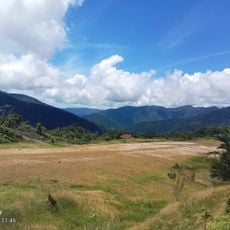
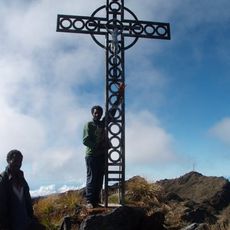
The four-day trek to the summit passes through different climate zones and requires hiring a local guide for the route. Proper preparation for altitude and suitable gear make the climb feasible for hikers with good endurance.
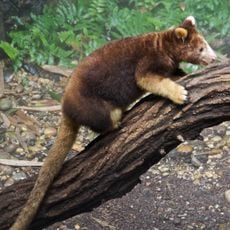
The summit plateau above about 3,400 m is cold enough for nightly frosts and occasional snowfall, and the bogs there hold frog species found nowhere else on earth. The world's largest moss, Dawsonia superba, grows up to 55 cm tall in the moss forest below.
The community of curious travelers
AroundUs brings together thousands of curated places, local tips, and hidden gems, enriched daily by 92,941 contributors worldwide.