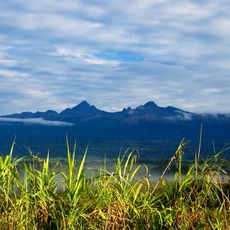
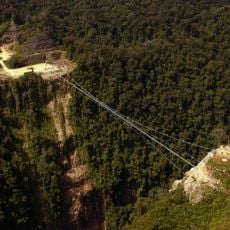
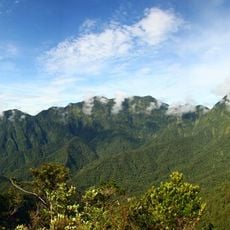
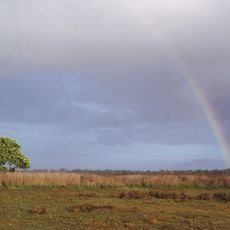
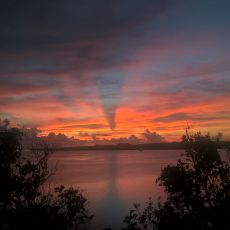
Tonda Wildlife Management Area, Protected wetland area in Western Province, Papua New Guinea.
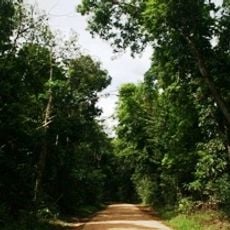
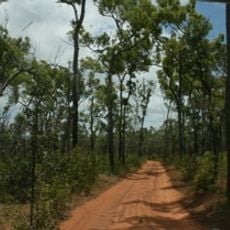
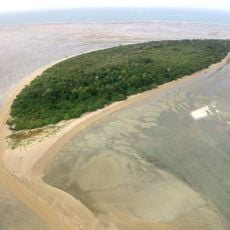
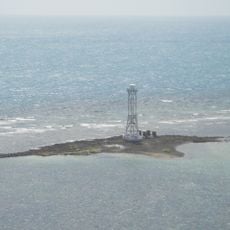
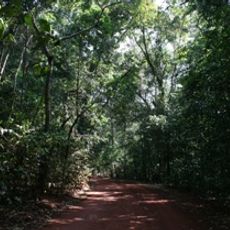
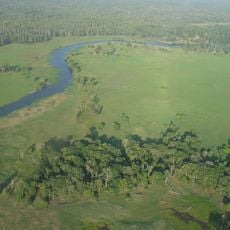
Tonda Wildlife Management Area is the largest protected area in Papua New Guinea, covering the flat south-western corner of Western Province below 45 metres above sea level and adjoining Indonesia's Wasur National Park. Its terrain holds tidal river reaches, mangrove areas, swamps, grassland, savanna woodland and patches of monsoon forest, with Acacia and Melaleuca trees and Phragmite and Pseudoraphis grasses.
Tonda Wildlife Management Area was established in 1975 under customary ownership, with rules restricting hunting by non-customary landowners. In 1993 it was listed as a Ramsar wetland of international importance. A Tri-National Wetlands Program begun by WWF in 1995 with Wasur National Park and Australia's Kakadu National Park led to a 2002 memorandum between the three conservation agencies. In 2006 it was proposed as a World Heritage Site within the Trans-Fly Complex.
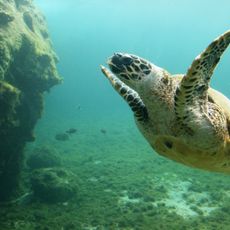
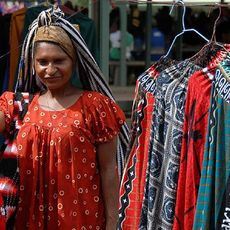
About 1,500 subsistence gardeners and hunters live in 12 villages within the area, which is held under customary ownership. The western part of Tonda covers land of the Kanum peoples. Local people harvest wildlife resources such as deer meat and antlers, candlenut and freshwater turtle plastra, selling some to merchants across the Indonesian border.
Access is by boat or light aircraft from the Bensbach River side, and the flat terrain below 45 metres means tidal river reaches and swamps can cut off tracks. The 12 villages on customary land are reached with landowner permission; the drier months are easier for moving around.
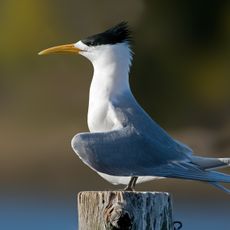
The plains host a vital stopover point for little curlews during their long-distance migration across the globe. Large numbers of these birds gather here to rest and feed before continuing their journey.
The community of curious travelers
AroundUs brings together thousands of curated places, local tips, and hidden gems, enriched daily by 92,762 contributors worldwide.