James Clerk Maxwell Telescope, Radio telescope at Mauna Kea Observatory, United States
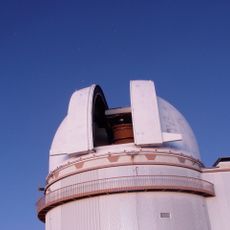
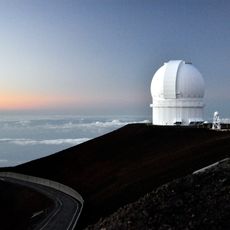
The James Clerk Maxwell Telescope is a radio observatory on Mauna Kea with a 15-meter primary mirror designed to observe submillimeter wavelengths from an elevation of about 4,000 meters (13,000 feet). The instrument allows astronomers to study stars, galaxies, and cosmic dust across vast distances.
Operations began in 1987 through a partnership between the United Kingdom, Canada, and the Netherlands. This international effort marked a turning point in how astronomers could observe the submillimeter universe.
The telescope is named after James Clerk Maxwell, the Scottish physicist who formulated the equations describing electromagnetism. Since 2015 it has been operated by the East Asian Observatory, funded by institutions in Japan, China, Taiwan and South Korea, with a consortium of universities from the United Kingdom and Canada.
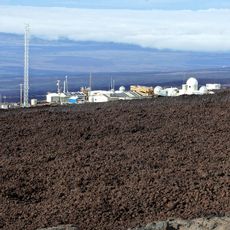
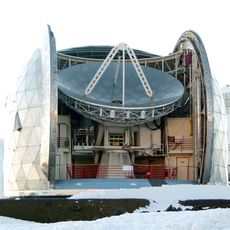
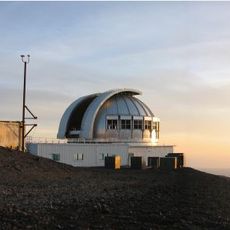
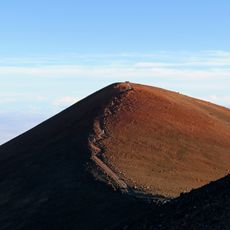
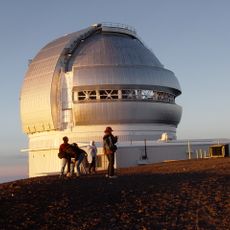
The telescope stands near the summit of Mauna Kea at 4,092 metres, reached by an unpaved access road; the altitude makes acclimatisation advisable. The antenna and mountings are enclosed in a co-rotating carousel whose aperture is covered by a transparent membrane, so the dish is not directly visible from outside.
In 1984 the telescope's sea voyage went wrong: the captain diverted to load explosives, was delayed at the Panama Canal, then demanded late fees and threatened to throw the telescope overboard. The Coast Guard boarded the ship and arrested him at gunpoint before the instrument reached Hawaii.
The community of curious travelers
AroundUs brings together thousands of curated places, local tips, and hidden gems, enriched daily by 93,950 contributors worldwide.