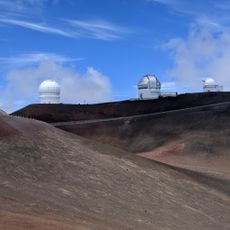
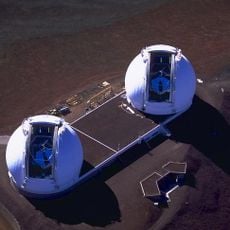
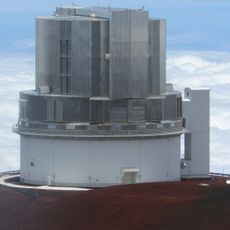
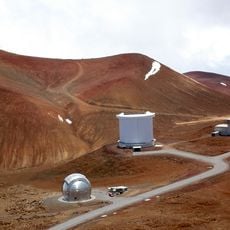
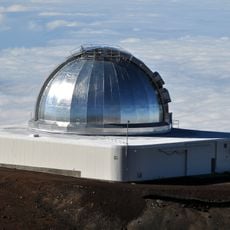
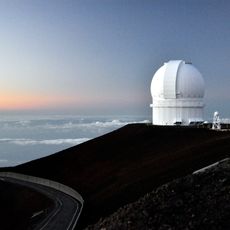
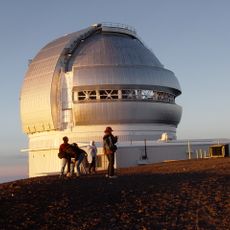
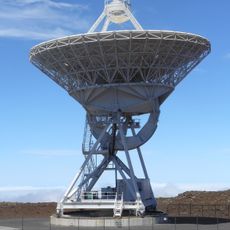
UH88, Optical telescope at Mauna Kea Observatories, US
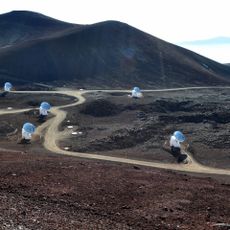
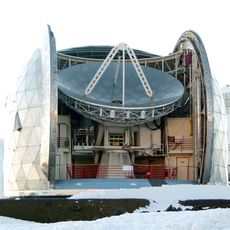
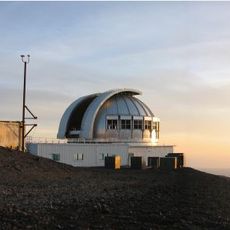
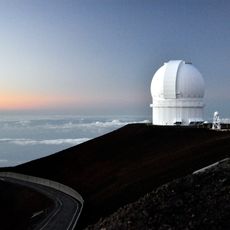
UH88 is an optical telescope with a 2.2-meter mirror located on the summit of Mauna Kea in Hawaii at roughly 4200 meters elevation. It operates as part of a cluster of observatories that share this high-altitude research site.
The telescope was built in 1968 and began operations in 1970, becoming one of the first professional astronomical instruments controlled by computer systems. This early automation marked a shift in how observatories conducted their research.
UH88 is operated by the University of Hawaiʻi's Institute for Astronomy, which shares observing time with outside groups: the National Astronomical Observatory of Japan uses it for projects where its larger Subaru telescope would be overkill, and the Nearby Supernova Factory mounts its SNIFS spectrograph here.
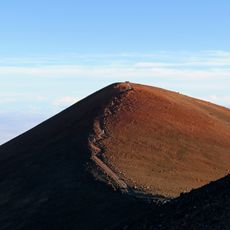
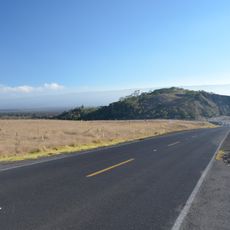
UH88 stands at about 4,200 meters on the Mauna Kea summit, reached by an unpaved access road; the altitude makes acclimatization and ample water essential. The telescope is a working research instrument, so access is arranged through the University of Hawaiʻi Institute for Astronomy rather than by walk-in visit. Summit weather shifts quickly, so layered clothing and a check on road and site conditions before setting out are advisable.
David C. Jewitt and Jane X. Luu found 15760 Albion, the first Kuiper belt object, with UH88 in 1990. A team led by Jewitt and Scott S. Sheppard later used the same telescope to discover 45 of Jupiter's known moons, plus moons of Saturn, Uranus and Neptune.
The community of curious travelers
AroundUs brings together thousands of curated places, local tips, and hidden gems, enriched daily by 94,360 contributors worldwide.