ʻĀinapō Trail, Historic hiking trail on Mauna Loa, Hawaii, United States
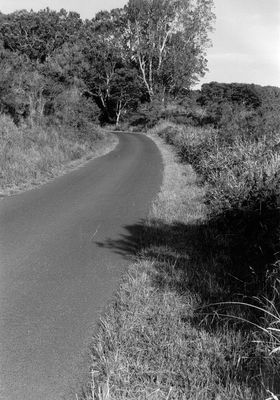
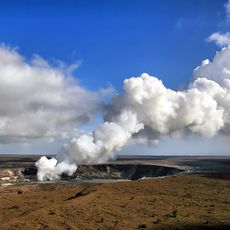
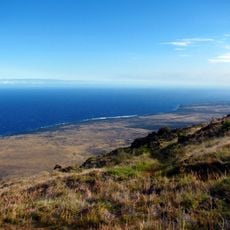
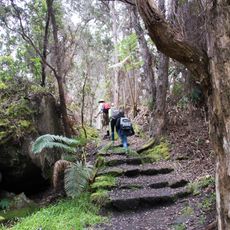
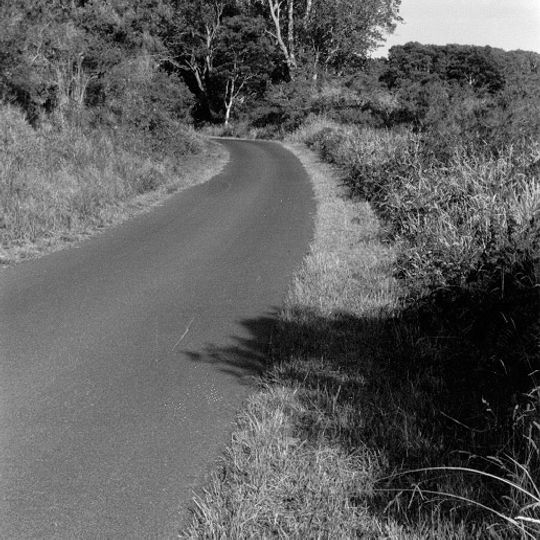
The ʻĀinapō Trail is a mountain path that extends roughly 35 miles from Kapapala to Mokuaweoweo crater, climbing through distinct climate and vegetation zones as elevation increases. The route passes through forests, shrublands, and sparse terrain before reaching the barren volcanic landscape at the summit.
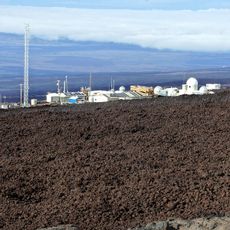
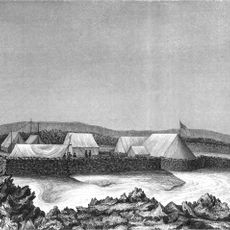
The route was first explored in 1794 by an expedition led by Archibald Menzies, who used barometric instruments to measure the mountain's elevation. This early scientific investigation helped establish the summit as an important location for further geographic and meteorological study.
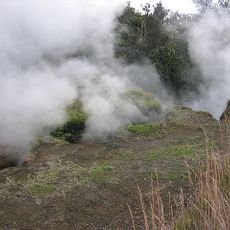
The name ʻāina pō means 'darkened land' in Hawaiian, referencing the thick cloud cover that blankets the middle elevation sections. This name reflects what hikers experience as they move through the misty and moisture-laden portions of the ascent.
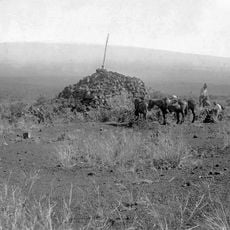
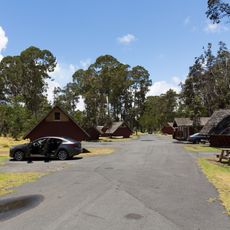
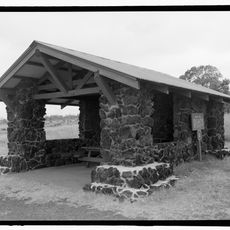
Hikers can stay overnight at camps with shelters positioned along the route to acclimatize to increasing elevation. Stone cairns mark less obvious sections, and visitors should arrive with solid physical conditioning and appropriate gear for changing weather conditions.
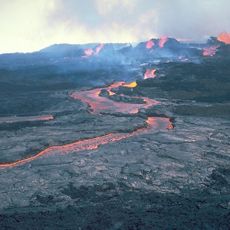
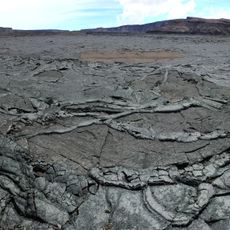
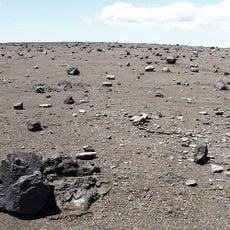
A section of roughly 11 miles above 11,650 feet has remained unchanged since prehistoric times, displaying a stark lava landscape that sits above the cloud layer. This high terrain offers a rare view of the mountain's geological and climatic extremes.
The community of curious travelers
AroundUs brings together thousands of curated places, local tips, and hidden gems, enriched daily by 91,283 contributors worldwide.