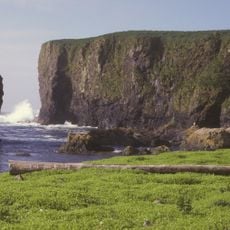
Aleutian Islands Wilderness, Protected volcanic archipelago in Alaska, United States
Aleutian Islands Wilderness is a protected archipelago in Alaska comprising more than 200 islands shaped by submarine volcanic activity. The landscape features dramatic coastlines, rocky terrain, and numerous active volcanic peaks rising from the surrounding ocean.
Settlement of these islands began roughly 9000 years ago with the Unangan people who adapted to life in this remote environment. Russian colonial control arrived in the early 18th century and lasted until the United States purchased the territory in 1867.
The Unangan people shaped these islands over thousands of years, and their connection to the sea and land remains visible in how communities interact with the environment. This heritage influences the way visitors experience the islands and understand their character.
Access to this wilderness area is challenging and typically requires boat or air transport, as there are no roads connecting the islands. Visitors should prepare for harsh weather, cold temperatures, and minimal infrastructure or facilities throughout the region.
The islands host approximately 40 million nesting seabirds, representing one of the most significant breeding grounds for these species in North America. This extraordinary concentration of seabird colonies draws researchers and nature enthusiasts from around the world.
The community of curious travelers
AroundUs brings together thousands of curated places, local tips, and hidden gems, enriched daily by 90,770 contributors worldwide.