Colima, Active volcano in Jalisco, Mexico
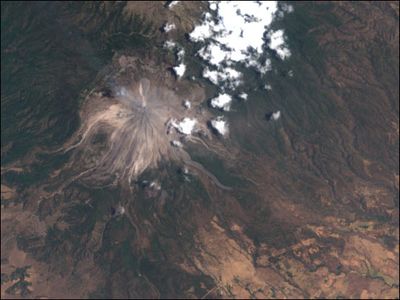
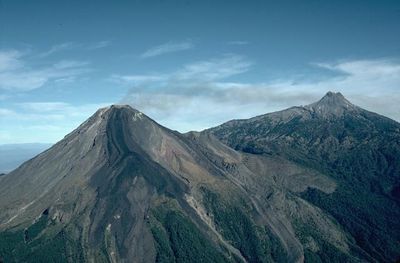
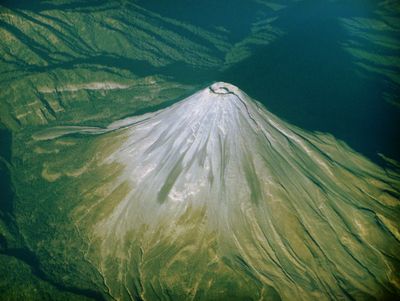
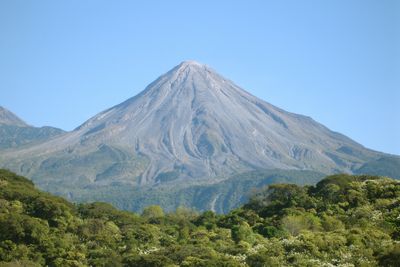
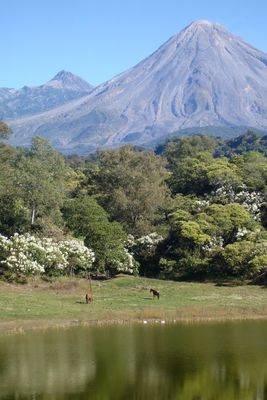
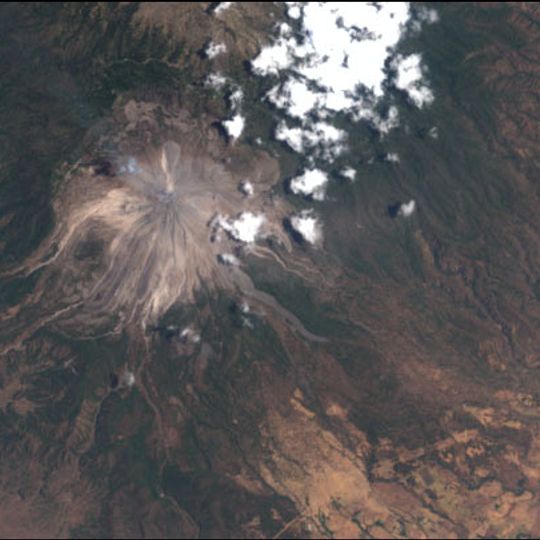
Colima is the youngest cone of the Colima Volcanic Complex, a stratovolcano on the Jalisco–Colima border whose official altitude is 3,860 m. Its pointed summit holds a small crater, and pale tan and grey streaks radiate down every flank as ridges and gullies, contrasting with the darker, green-covered lower slopes. A parasitic set of domes, El Volcancito, has grown on the northeast flank since 1869–1878.
The cone is the youngest of the Colima Volcanic Complex, active for nearly 5 million years, and has erupted more than 40 times since 1576. One of its largest eruptions ran from 20 to 24 January 1913. Since 1869–1878 a parasitic group of domes, El Volcancito, has grown on the northeast flank. In 1991 a lava dome filled the vent and was destroyed by an explosion that dropped ash on Tonila, San Marcos and Juan Barragán.
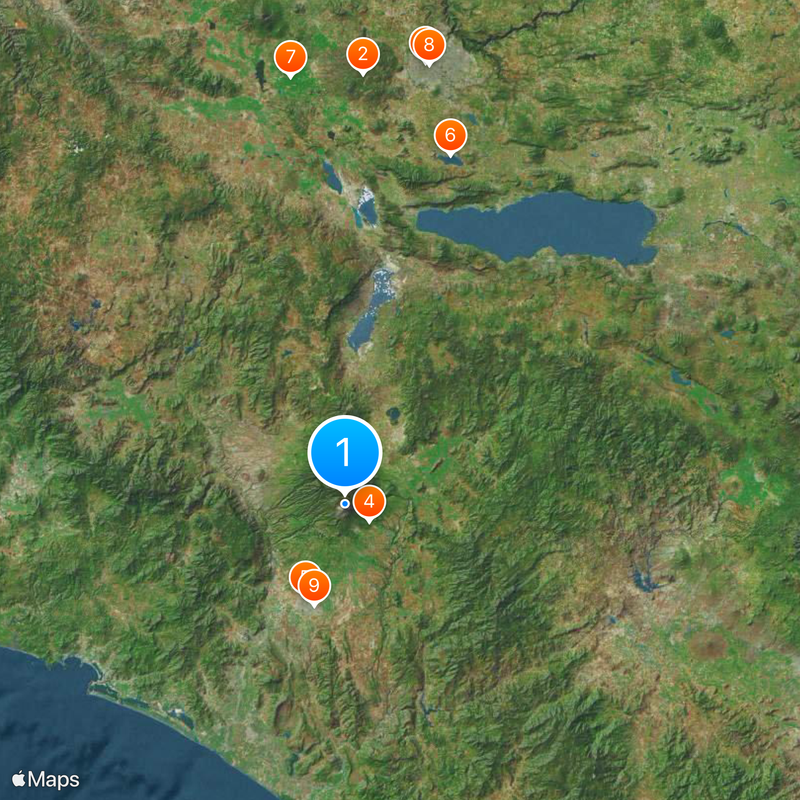
The volcano is watched from the Colima Volcano Observatory at the University of Colima, where a team analyses and communicates each event. In 2018 a webcam was installed near the cone, so its activity can be followed in real time. The municipalities closest to the flanks are Comala and Cuauhtémoc in Colima and Zapotitlán and Tonila in Jalisco.
The area is accessible to hikers in good physical condition, but authorities restrict access during periods of heightened activity to ensure safety. Visitors should check current conditions beforehand and note that exclusion zones may expand depending on volcanic behavior.
The peak holds high amounts of andesite, a volcanic rock with silica content between 56 and 61 percent, which shapes the surrounding landscape. This composition leads to thicker lava than in other volcano types, often favoring explosive outbursts.
The community of curious travelers
AroundUs brings together thousands of curated places, local tips, and hidden gems, enriched daily by 92,609 contributors worldwide.