Almolonga, Stratovolcano in Quetzaltenango Department, Guatemala
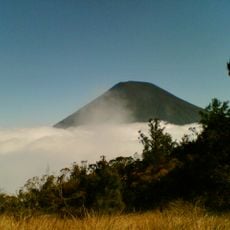
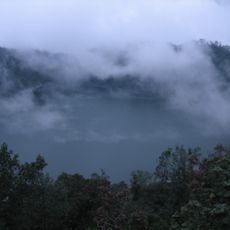
Almolonga, also called Cerro Quemado or La Muela, is an andesitic stratovolcano south of Quetzaltenango whose summit is the youngest and largest lava dome of the complex. Its collapsed edifice left a caldera 3.3 km wide and 350 m deep, ringed on the northern edge by dacitic and rhyolitic domes built from eight vents.
Activity in the Almolonga field began around 84,000 years ago, and the older stratovolcano collapsed before the Lake Atitlán caldera eruption, leaving a 3.3 km-wide, 350 m-deep depression. Cerro Quemado, the youngest dome complex, produced a flank collapse 1,150 years ago whose landslide ran 6 km southwest into the Llano de Pinal valley. Its 1818 eruption built a block lava flow that advanced 2.5 km east over about half a year.
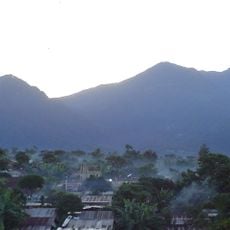
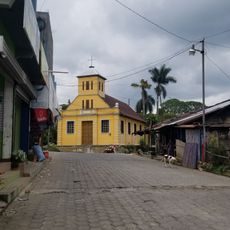
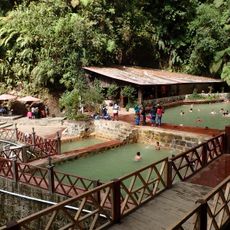
The volcano's name comes from the town of Almolonga beside it; in Nahuatl the word means "place where water springs forth", a reference to the area's springs. The mountain is also called Cerro Quemado (Burned Mountain) and La Muela (The Molar) for its shape. Its hydrothermal system feeds the Fuentes Georginas hot springs and the thermal baths of Almolonga.
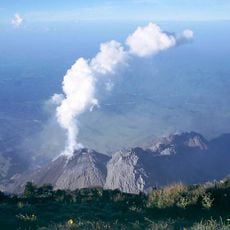
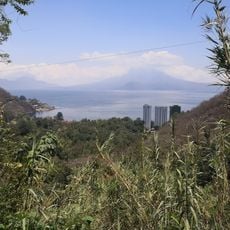
The summit overlooks the Quetzaltenango valley and the Santa María and Siete Orejas volcanoes. The northern and eastern flanks hold hot springs, including the Almolonga thermal baths and Fuentes Georginas, fed by the Zunil fault zone. Lahars and explosive activity remain potential hazards.
Cerro Quemado, the youngest and largest dome of the Almolonga complex, collapsed on its flank about 1,150 years ago. The landslide ran 6 km south-southwest into the Llano de Pinal valley, covered 13 km² and sent a lateral blast that also struck the neighbouring Siete Orejas volcano. A new lava dome later grew inside the collapse scar.
The community of curious travelers
AroundUs brings together thousands of curated places, local tips, and hidden gems, enriched daily by 94,452 contributors worldwide.