Guayabo National Monument
Guayabo National Monument, Archaeological site in Turrialba Canton, Costa Rica.
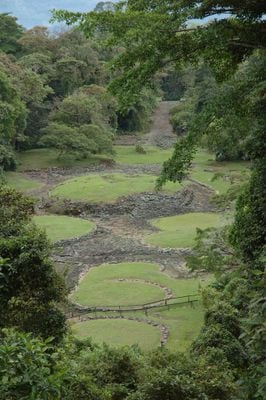
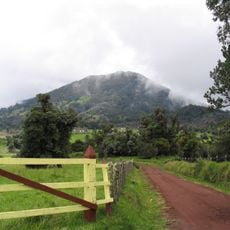
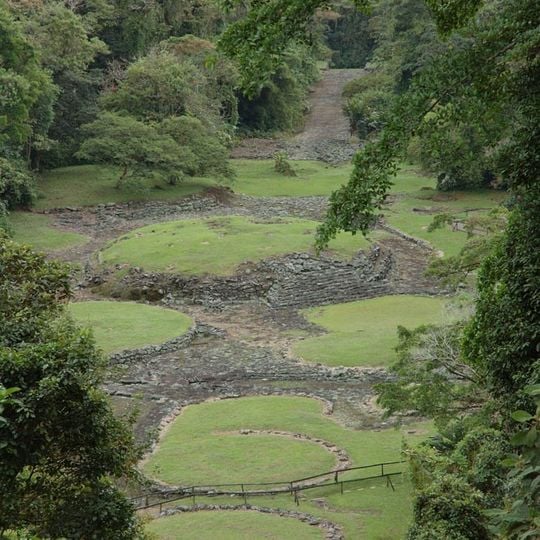
Guayabo National Monument is an archaeological site on the southern slope of Turrialba Volcano in Turrialba Canton, Costa Rica. The area includes excavated stone foundations, water channels, paved pathways, burial sites, and rock carvings spread between forest and open clearings.
The first inhabitants settled here around a thousand years before the common era and developed a complex settlement system over centuries. The community reached its greatest extent around the year eight hundred of the common era before people left the place in the fifteenth century.
The site takes its name from the guayabo tree and still shows the round stone platforms where wooden houses with palm-thatch roofs once stood. Visitors can walk along the old paved paths and see water flowing through carved channels and canals that have crossed the grounds for centuries.
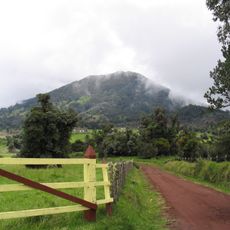
The monument sits on Turrialba Volcano and opens daily until mid-afternoon, with different entry costs for locals and international guests. Sturdy shoes are recommended for the trails since the terrain is uneven and some sections pass through wooded areas.
An engineering society from the United States honored the site for its pre-Columbian infrastructure achievements and granted it an international title. The recognition highlights the advanced building techniques applied here centuries before Europeans arrived.
Location: Turrialba Canton
Location: Cartago Province
Elevation above the sea: 811 m
Website: https://sinac.go.cr/ES/ac/accvc/mng/Paginas/default.aspx
GPS coordinates: 9.97244,-83.69140
Latest update: December 5, 2025 22:31
South America preserves a monumental heritage that reflects centuries of history, from pre-Columbian civilizations to the contemporary era. This collection includes archaeological sites, colonial-era religious buildings, public squares, and modern artistic creations scattered across the continent. Each monument tells a part of South American history, whether it be ancient fortresses, Baroque churches, or recent sculptures. Among these sites are the Santa Catalina Arch in Antigua, Guatemala, a 17th-century construction that once connected two convents; the Public Market in Porto Alegre, Brazil, a functioning 19th-century commercial building; and Desert Hand in Chile, a contemporary sculpture of 11 meters rising from the Atacama Desert. The Middle of the World monument near Quito, Ecuador, marks the equator line, while the Christ of the Pacific overlooks Lima from its hill. These monuments, whether of pre-Columbian, colonial, or modern origin, provide tangible insight into the cultural and architectural development of the South American continent.
Costa Rica spans 19,700 square miles (51,100 square kilometers) between the Pacific Ocean and Caribbean Sea, offering photographers a concentration of varied landscapes within a compact area. The country maintains over 30 national parks and protected areas, including Arenal Volcano, whose near-perfect cone rises 5,479 feet (1,670 meters) above surrounding rainforest, and Monteverde Cloud Forest, where mist drifts through canopy vegetation supporting rare species such as the resplendent quetzal. Rio Celeste flows through Tenorio Volcano National Park, displaying its characteristic turquoise color from volcanic minerals, while Tabacon Hot Springs delivers naturally heated water from underground sources. Coastal regions present diverse subjects, from the beaches of Manuel Antonio National Park, where white-faced capuchin monkeys move through trees, to Cahuita National Park on the Caribbean coast with its coral reefs. The Nicoya Peninsula and Papagayo Peninsula provide access to Tamarindo Beach and Santa Teresa Beach, while the southern zone includes Marino Ballena National Park, named for its whale-shaped sandbar visible at low tide. Tortuga Island, off the coast of Puntarenas, serves as a day-trip destination. Inland, San Jose Central Market documents daily commerce, the National Theater displays neoclassical architecture from 1897, and Guayabo National Monument preserves pre-Columbian ruins. Cerro Chirripó rises to 12,533 feet (3,820 meters) as the country's highest point, offering views of both oceans in clear conditions.
Irazú Volcano
17.2 km
Turrialba
9.4 km
National Museum of Costa Rica
41.9 km
Braulio Carrillo National Park
37.4 km
Irazú Volcano National Park
19.1 km
Nuestra Señora de los Ángeles
27.1 km
Pre-Columbian Gold Museum
42.5 km
Orosi Church
26.5 km
Castillo Azul
41.9 km
Parque del Este
35.1 km
Tapantí National Park
25.4 km
Cerro Zurquí
38.2 km
Castillo del Moro
42.4 km
Parque España
42.1 km
Plaza Cleto González Víquez
42.3 km
Barbilla National Park
29.9 km
Museum of Contemporary Art and Design
41.9 km
Lankester Botanical Garden
26.4 km
Turrialba Volcano National Park
10.7 km
Biblioteca Nacional Miguel Obregon Lizano
41.9 km
Las Mercedes
23.1 km
Students Promenade
42.4 km
Maroy Building
42.4 km
Omar Mosque and Islamic Center of Costa Rica
41.2 km
Our Lady of Carmel Cathedral, Cartago
28 km
Iglesia de San Diego (La Unión)
34.9 km
Torre Latitud Los Yoses
41 km
Spirogyra Butterfly Farm Park Garden
42 kmReviews
Visited this place? Tap the stars to rate it and share your experience / photos with the community! Try now! You can cancel it anytime.
Discover hidden gems everywhere you go!
From secret cafés to breathtaking viewpoints, skip the crowded tourist spots and find places that match your style. Our app makes it easy with voice search, smart filtering, route optimization, and insider tips from travelers worldwide. Download now for the complete mobile experience.
A unique approach to discovering new places❞
— Le Figaro
All the places worth exploring❞
— France Info
A tailor-made excursion in just a few clicks❞
— 20 Minutes