Chilpancingo Cathedral, Neoclassical cathedral in Chilpancingo, Mexico.
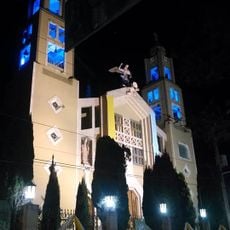
Chilpancingo Cathedral is a neoclassical church with two naves and two heavy, two-story bell towers framing the facade. The main portal has two sections and a frontispiece: the first shows bossage without columns and the access arch; the second has a choir window flanked by square Tuscan columns and two large medallions, topped by a triangular pediment and a frontispiece with the eagle of Iturbide's imperial coat of arms. The austere interior has lateral altarpieces in the same style, and two chapels: the north dedicated to the Blessed Sacrament and the south to the Immaculate Conception, which also serves as a mausoleum for priests and bishops.
Construction of the cathedral began in the late 18th century and continued into the early 19th century. On September 13, 1813, General José María Morelos y Pavón installed the seat of the First Congress of Anáhuac here, where he proclaimed himself Servant of the Nation and presented the Act of Independence and the Sentimientos de la Nación. The earthquake of December 10, 2011 caused structural damage that forced the building to close.
The north chapel is dedicated to the Blessed Sacrament and the south chapel to the Immaculate Conception; the south chapel also serves as a mausoleum holding the remains of priests and bishops. Since 2022 the cathedral has hosted the annual Hermanos Bravo civil merit awards, presented around 20–22 April to mark the anniversary of Nicolás Bravo's death.
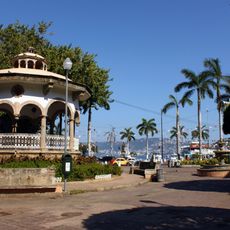
The cathedral stands on the Plaza Cívica Primer Congreso de Anáhuac in the city centre, within the historic centre of Chilpancingo de los Bravo. It was closed after the earthquake of 10 December 2011 while engineers assessed whether it would be demolished in whole or in part, so check current access before planning a visit. The two towers frame the facade, and the south chapel, dedicated to the Immaculate Conception, also holds the tombs of priests and bishops.
Above the triangular pediment stands a small figure of the eagle from Iturbide's imperial coat of arms, a detail tied to the First Mexican Empire of 1821–1823. Most visitors look at the portal's Tuscan columns and miss it.
The community of curious travelers
AroundUs brings together thousands of curated places, local tips, and hidden gems, enriched daily by 94,418 contributors worldwide.