Teopantecuanitlan, Archaeological site in Guerrero, Mexico.
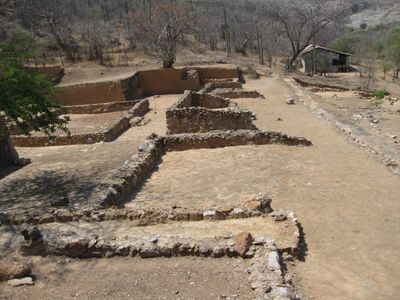
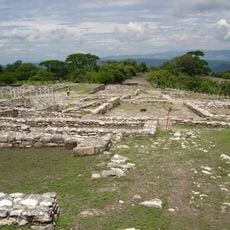
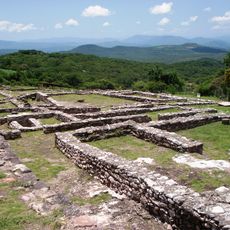
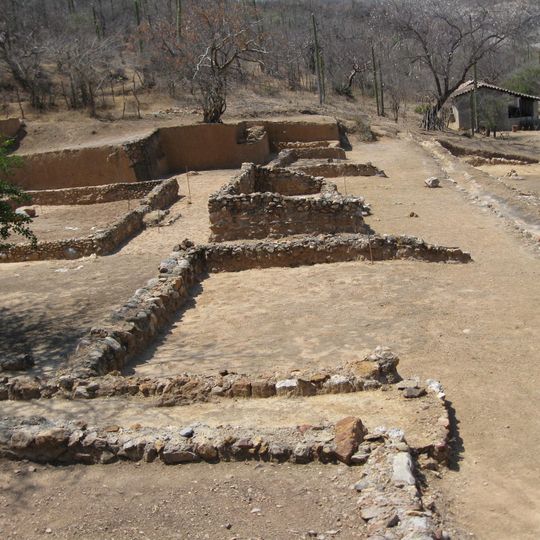
Teopantecuanitlan is an archaeological site in Guerrero, Mexico, near the village of Tlalcozotitlan, about 20 km southwest of Copalillo. It covers 1.6 to 2 km² at the foot of a hill rising 200 m, near where the Amacuzac and Balsas rivers converge. The visible remains include low stone and earthen walls forming rectangular and L-shaped enclosures, with a taller curved wall section on the left and a small niche near its base.
The site was occupied from around 1400 to 500 BCE, with its population peak occurring between 1000 and 800 BCE during the Early to Middle Formative Period. This flourishing time reveals how communities developed organized settlements and built lasting water management systems.
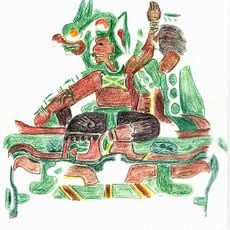
The name Teopantecuanitlan comes from Nahuatl words meaning "place of the temple of the jaguar," after the four 3- to 5-ton travertine blocks flanking the Sunken Patio, carved as were-jaguars with almond eyes and down-turned mouths. Archaeologist Guadalupe Martinez Donjuán reads them as markers of the equinoxes and solstices. The back of Monument 2 bears glyphs she interprets as "10 Flower," possibly the oldest Mesoamerican calendar date found.
Visitors can move through the site along marked pathways that connect residential areas, ball courts, and ceremonial platforms. Informational signs throughout help orient you and explain what you are seeing at different locations.
The grounds hold one of Mesoamerica's oldest known irrigation systems, built around 1200 BCE using rough stones and flat stone slabs. This engineering achievement shows how early peoples mastered water management techniques that sustained their farming.
The community of curious travelers
AroundUs brings together thousands of curated places, local tips, and hidden gems, enriched daily by 94,466 contributors worldwide.