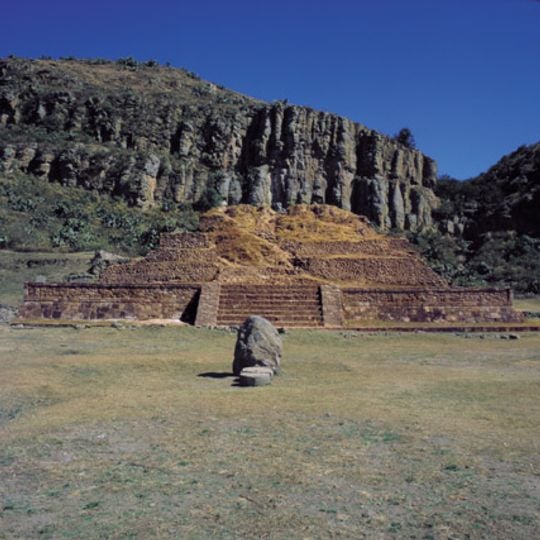
Huapalcalco, Archaeological site in Tulancingo de Bravo, Mexico.
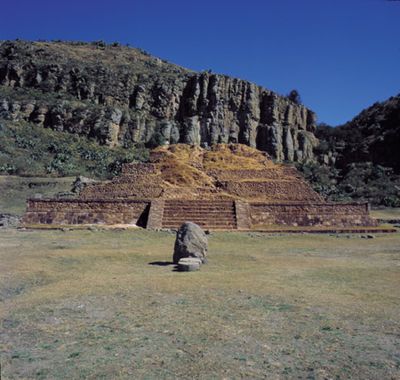
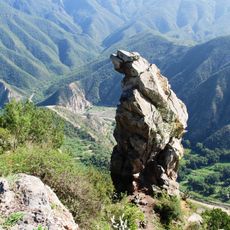
Huapalcalco is an archaeological site in Tulancingo de Bravo situated on the western slope of Cerro El Tecolote with pyramid-shaped structures and ancient ceremonial platforms. The complex spans multiple sectors with remains of buildings and caves that show evidence of different periods of habitation.
Huapalcalco flourished during the Classic period (100–650 CE) under strong Teotihuacan influence, with additional traits from Gulf Coast cultures such as the Olmeca-Xicalanca. It later formed part of the second Toltec Empire before the rise of Tula, and tradition holds that Topiltzin Quetzalcoatl resided here before ruling Tula. The site is considered the oldest human settlement in Hidalgo, with artifacts dating to about 13,000 years before present.
The cave paintings here depict human figures and celestial symbols created by the site's earliest inhabitants. These artworks reveal how ancient people understood their world and marked sacred meanings on stone surfaces.
The site is accessible via Federal Highway 130 from Pachuca, with local colectivos providing transport connections to the area. Visitors should wear sturdy shoes as the terrain is uneven and crosses forested slopes.
The pyramid has three bodies (tiered sections), not three sides: it measures 12 metres at its base and rises 8 metres, built under Teotihuacan influence. Beside it stands an altar thought to have held offerings. The site also keeps cave paintings on Huiztle Hill and the Huapalcalco plateau, dated to roughly 9000 BCE.
The community of curious travelers
AroundUs brings together thousands of curated places, local tips, and hidden gems, enriched daily by 94,128 contributors worldwide.