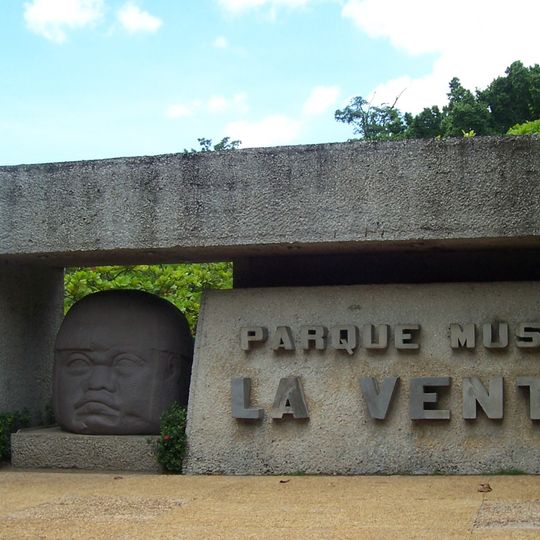
Parque-Museo La Venta, Archaeological museum park in Villahermosa, Mexico.
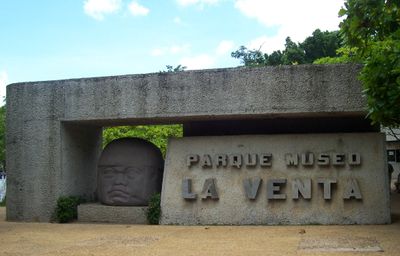
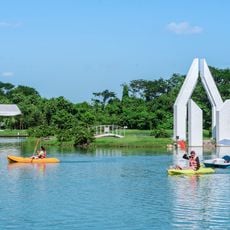
The Parque-Museo La Venta is an outdoor museum setting in Villahermosa displaying more than 30 ancient monuments spread across landscaped grounds. The collection includes carved altars, standing stone slabs, and colossal head sculptures created by an early Mesoamerican people.
Frans Blom and Olivier La Farge identified the La Venta site in Huimanguillo in 1925; Matthew Stirling and Phillip Drucker explored it in 1940. In the 1950s Pemex found oil nearby and destroyed many remains, so Carlos Pellicer Cámara, working from 1951, had the monuments moved to Villahermosa. The transfer of the monoliths took place in July and August 1957, and the park-museum opened on 4 March 1958.
The site displays carved stone works from the Olmec civilization that represent rulers and spiritual meanings. Visitors can explore these ancient creations set among trees and water, understanding how this society gave importance to monumental art.
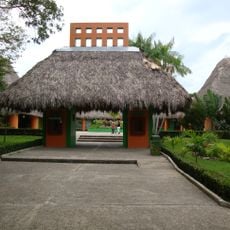
The visit begins in an introduction room with panels and a scale model, then follows paved walkways through the reproduced jungle to the monuments; the zoological area sits at the entrance. Some animals, such as deer and monkeys, roam free, while jaguars and crocodiles are kept in enclosures. A light and sound show runs on Tuesday to Sunday evenings.
The crocodile Papillón lived in the zoo area and became famous in Villahermosa for escaping several times; he was the oldest and largest there and died on 21 January 2014. The archaeological area holds 33 monoliths placed almost exactly as they were found at La Venta.
The community of curious travelers
AroundUs brings together thousands of curated places, local tips, and hidden gems, enriched daily by 93,762 contributors worldwide.