Sacred Cenote, Ancient ceremonial cenote in Chichen Itza, Mexico
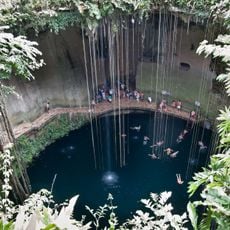
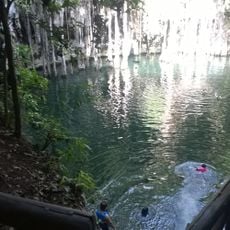
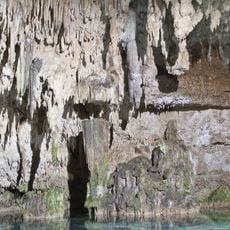
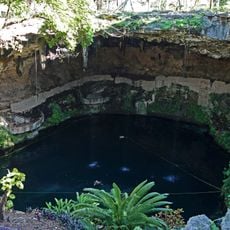
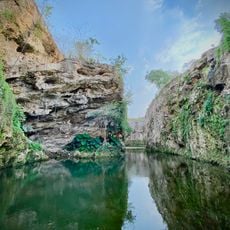
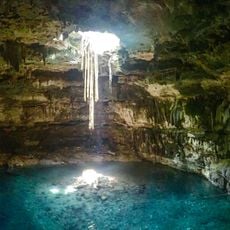
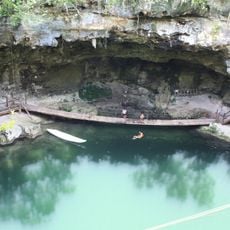
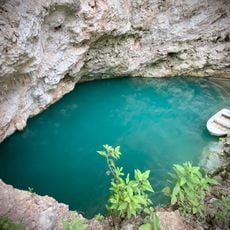
The Sacred Cenote is a water-filled sinkhole in limestone at Chichén Itzá, 60 metres in diameter, with sheer cliffs dropping to the water table 27 metres below. Its still, opaque green water is bordered by layered gray and tan rock walls; thin tree trunks and foliage line the rim. A 300-metre sacbe links it to the civic precinct.
The cenote was a Maya pilgrimage site where offerings were thrown to the rain god Chaac, as Diego de Landa recorded in 1566. Edward Herbert Thompson dredged it from 1904, funded by Stephen Salisbury III, and dived in 1909. INAH, the National Geographic Society and CEDAM explored it in 1961; Norman Scott and Román Piña Chán followed in 1967–1968.
Maya pilgrims came to this well to honour Chaac, the rain god, throwing in jade, gold, copal and human bodies; Friar Diego de Landa recorded in 1566 that victims were believed not to die. Many objects were deliberately broken before being cast in, a practice interpreted as "killing" the offering.
Visitors can view the water from observation platforms positioned along the rim, though swimming is not permitted. Stick to the marked walkways and railings for safe viewing of the water's surface and the surrounding walls.
Thompson's 1909 dive found a 5-metre layer of blue pigment on the bottom, along with gold objects, jades and copper bells lodged in cracks. He wrote that he had "personally trod the bottom of the Cenote."
The community of curious travelers
AroundUs brings together thousands of curated places, local tips, and hidden gems, enriched daily by 93,340 contributors worldwide.