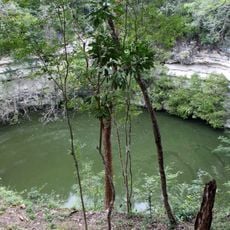
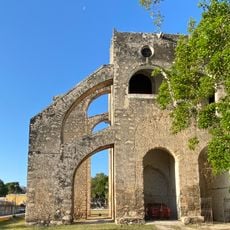
Cenote Zací, Natural sinkhole in central Valladolid, Mexico.
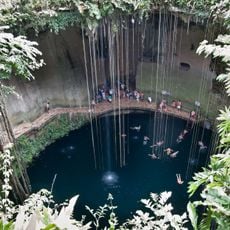
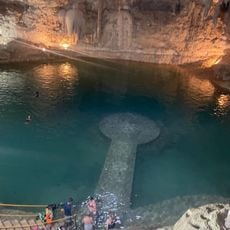
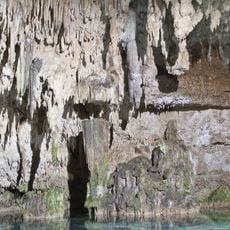
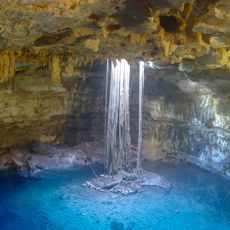
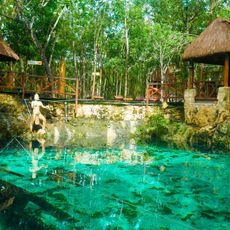
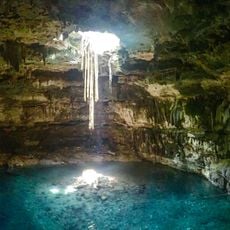
Cenote Zací is a cenote in a partially collapsed cavern in Valladolid, Yucatán. The cave is 150 feet across and 260 feet deep, with stalactites on its ceiling. A sloped passage with stairs carved from the rock leads down to the water, which is 25 to 30 meters deep in shallow areas and 100 meters at its deepest.
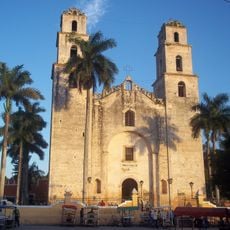
Zací was a Maya settlement whose Capul clan fought the first conquistadors there. Valladolid was founded on the site in 1543, and the cenote served as the city's water source. The cave is partially collapsed, 150 feet across and 260 feet deep.
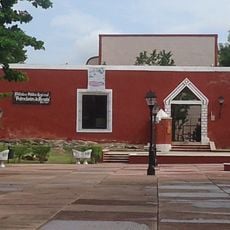
Zací means "White Hawk" in Maya, the name of the settlement that stood here before the Spanish arrived. The Capul clan fought the first conquistadors at this spot, and Valladolid was founded nearby in 1543. The cenote later served as the city's water source, and an on-site museum displays Maya artifacts.
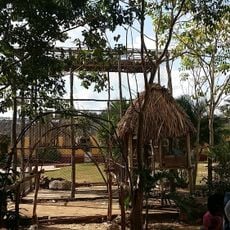
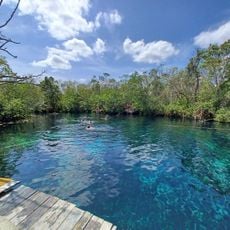
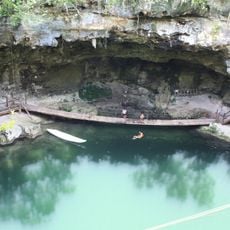
A sloped passage with stairs carved from the rock leads down to the water; some visitors jump from a ledge into it. Swimming is allowed but not encouraged, since there are no changing rooms and sewer pipes run close by. The cenote lies on the block formed by Calles 34, 36, 37 and 39, a few blocks northeast of the main plaza, with an open-air restaurant at the top.
Zací means "White Hawk" in Maya, named after the settlement that stood here, where the Capul clan fought the first conquistadors. The cenote later supplied Valladolid's water after the city was founded in 1543. Its urban setting, a few blocks northeast of the main plaza between Calles 34, 36, 37 and 39, sets it apart from other cenotes.
The community of curious travelers
AroundUs brings together thousands of curated places, local tips, and hidden gems, enriched daily by 93,779 contributors worldwide.