El Meco, Mayan archaeological site in Cancun, Mexico.
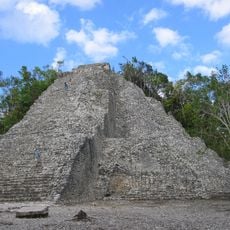
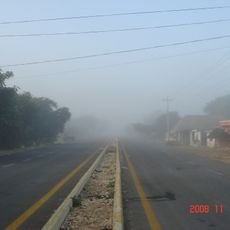
El Meco is a Maya archaeological site on the Caribbean coast of Quintana Roo, at kilometre 2.7 of the Puerto Juárez–Punta Sam road, about eight kilometres north of central Cancún. Excavations uncovered 14 structures, including the five-tiered Castillo pyramid, which stands 17 metres high and is the largest Maya building in the region. The road through the site separates the main religious complex from the unexcavated remains of the harbour.
El Meco was likely settled in the Early Classic period (250–600 AD), as ceramics found beneath Structure 2 indicate; it was probably a small fishing village, possibly under Cobá's influence. The site was abandoned by 600 AD and reoccupied around 1000–1100 AD, when it linked closely to Chichén Itzá and later to Ich Paa. From about 1200 AD, as inland cities declined, its harbour made it one of the main ports of the Caribbean coast. It was abandoned soon after the Spanish arrived in the 16th century.
The original Maya name of the settlement is unknown; El Meco is said to derive from the owner of a coconut plantation on the site. The ruins lie on the mainland of Isla Mujeres municipality, directly facing the island, and the road Puerto Juárez–Punta Sam cuts through the archaeological zone. The site was probably the link port to Isla Mujeres.
The site is located north of Cancun and easily accessible by car or taxi, with sturdy footwear recommended due to uneven terrain. There is limited shade across the grounds, so sun protection is essential and visiting in early morning hours is advisable.
The five-stepped pyramid called El Castillo reaches 17 m, the tallest Maya building in the region, and the site's 14 excavated structures belong to its religious precinct. Across the road, the remains of the harbour installation have not been systematically excavated.
The community of curious travelers
AroundUs brings together thousands of curated places, local tips, and hidden gems, enriched daily by 93,789 contributors worldwide.