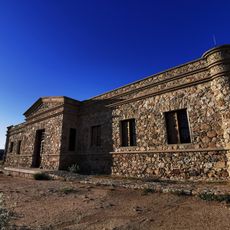
El Vallecito, Archaeological site in La Rumorosa, Mexico.
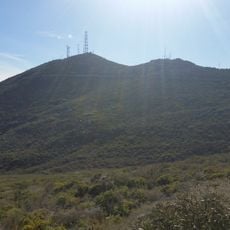
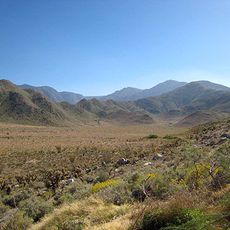
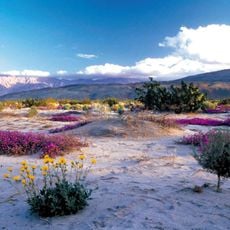
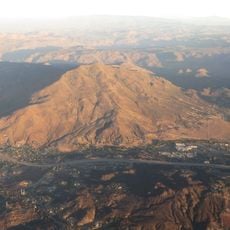
El Vallecito covers 165 hectares of flat ground with granite outcrops and low hills in the Sierra de Juárez, northeast of La Rumorosa. A marked trail of about two kilometres leads past 23 rock shelters and open caves painted in the Diegueño style with red, black, white and yellow figures, including humans, animals, lines, suns and geometric shapes. Morteros, grinding holes used by the Kumeyaay, are visible along the route.
Occupation of the site dates back roughly to 8000 BCE, and the white, black and red figures were painted about three thousand years ago, when Yuman or Quechan groups moved into Baja California from what is now the United States. The Kumeyaay, also called Kumiai, held territory from Santo Tomás to the San Diego coast and from the Escondido area to the Laguna Salada and the Sierra Juárez.
The paintings belong to the Diegueño style, using red, black, white and yellow pigments also found about 800 km south at Cataviña and at Anza-Borrego in California. Five painted rock shelters stand out: El Tiburón, El Diablito, El Hombre Enraizado, La Cueva del Indio and Solecitos. El Diablito, a red anthropomorphic figure with a feather headdress, is read as a Kumiai shaman.
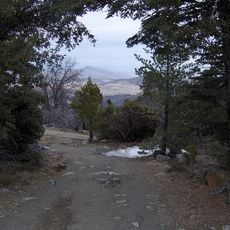
The site is accessible via Federal Highway 2D, with a dirt road beginning after the Vallecitos exit. A hiking trail then leads visitors to the rock paintings and formations.
During winter solstice mornings, sunlight interacts with the El Diablito painting, creating a natural illumination effect on the figure's eyes. This rare occurrence reveals the Kumeyaay understanding of celestial movements.
The community of curious travelers
AroundUs brings together thousands of curated places, local tips, and hidden gems, enriched daily by 94,514 contributors worldwide.