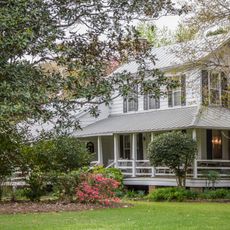
Loch Dhu, historic plantation house in Berkeley County, South Carolina, USA
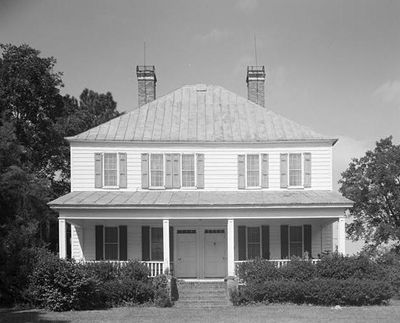
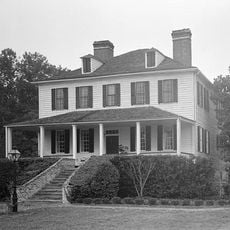
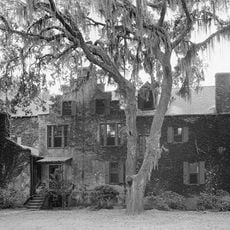
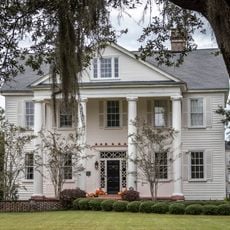
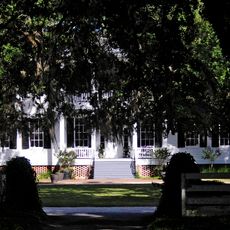
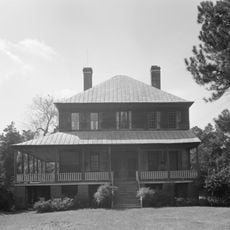
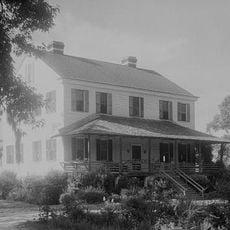
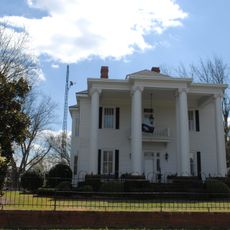
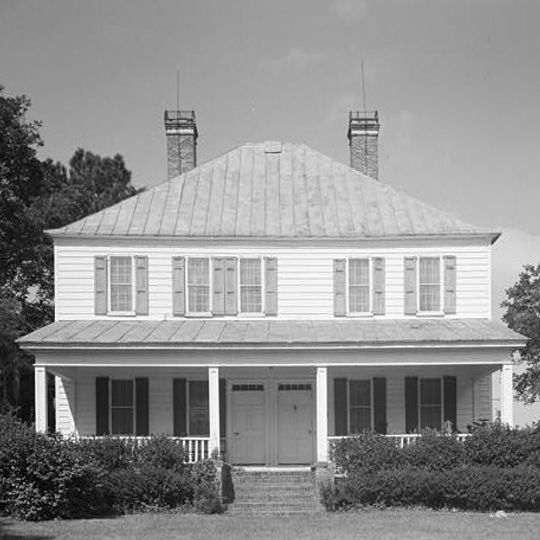
Loch Dhu is a two-story clapboard house with a hip roof, a brick foundation, and two interior chimneys, built around 1812–1816. Its front has two closely spaced doors entering separate rooms, each flanked by two nine-over-nine windows; the upper story has five such windows, the middle one off center. A modern two-story addition stands at the rear, and the original separate kitchen, barn, and smokehouse remain.
Loch Dhu was probably built by planter Robert J. Kirk around 1812–1816, and the plantation took its name from a dark pond on the land. His son Philip C. Kirk inherited it; the 1860 Agricultural Census listed 550 acres improved and 260 unimproved, planted in cotton, corn and sweet potatoes. Philip Kirk sat in the South Carolina General Assembly from 1854 to 1864 and served as a Confederate Army surgeon, nursing wounded soldiers at the plantation.
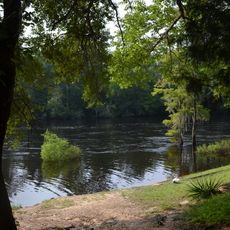
The name Loch Dhu is Scottish Gaelic for "black lake", taken from a dark pond on the plantation. Philip C. Kirk, who inherited the house, sat in the South Carolina General Assembly from 1854 to 1864. The two front doors, set close together and opening into separate rooms, are a detail a visitor can spot on the facade.
Loch Dhu stands on Loch Dhu Lane, about 1.3 miles north of South Carolina Route 6 and roughly 7 miles east of Eutawville. The house is privately owned and not open to the public, so visits require the owners' prior permission. The old separate kitchen, barn and smokehouse still stand near the main house.
Loch Dhu survived the creation of Lake Marion because it stood on higher ground, while many neighbouring plantation houses were lost to the water; the architecturally significant Hanover House was instead moved to Clemson. The old separate kitchen, barn and smokehouse still stand on the property.
The community of curious travelers
AroundUs brings together thousands of curated places, local tips, and hidden gems, enriched daily by 92,776 contributors worldwide.