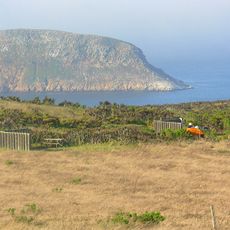
Point Conception Light, Maritime lighthouse station at Point Conception, Santa Barbara County, United States
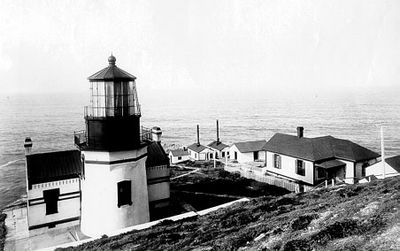
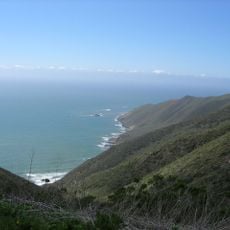
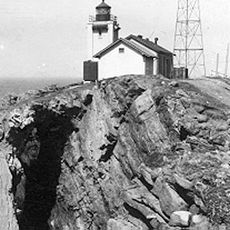
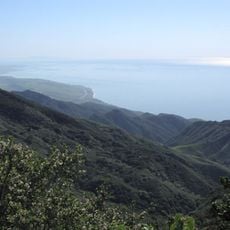
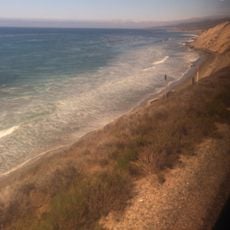
Point Conception Light is a maritime lighthouse station on the California coast that marks the western entrance to the Santa Barbara Channel. The structure sits on an elevated point and remains part of an active monitoring station, though it is now largely automated in its operations.
The lighthouse was first built in 1856 and relocated to a higher bluff in 1881 to improve visibility for vessels in these dangerous waters. This move reflected lessons learned about the effectiveness of the beacon's original placement.
The point's name, Punta de la Limpia Concepción, was given by Sebastián Vizcaíno in 1602. The 1835 near-capsizing of the sailing ship Pilgrim in a sudden change of weather here is still typical of boaters today. The lighthouse itself appeared in the 1959 film The Monster of Piedras Blancas and in two Toad the Wet Sprocket music videos.
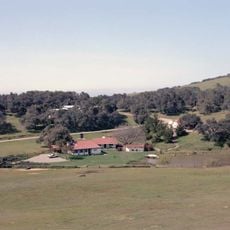
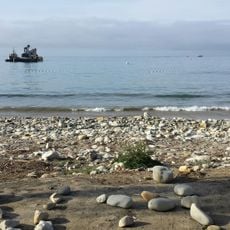
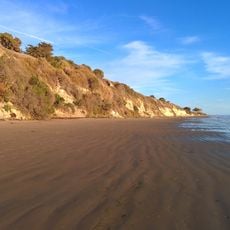
Access is blocked on the northwest by Vandenberg Space Force Base, which owns the land and the lighthouse, and on the adjoining side by the Jack and Laura Dangermond Preserve. A few people have reached the tower by hiking west along the narrow public beach several miles from the nearest road at low tide. The station stands 41 m above the Pacific, and its foghorn sounds every 30 seconds.
The lighthouse appeared as a filming location in The Monster of Piedras Blancas (1959) and in two Toad the Wet Sprocket music videos, Come Back Down (Pale) and Walk on the Ocean (Fear). Its foghorn sounds one blast every 30 seconds.
The community of curious travelers
AroundUs brings together thousands of curated places, local tips, and hidden gems, enriched daily by 94,691 contributors worldwide.