Fort Rock Cave, Archaeological cave in Lake County, Oregon
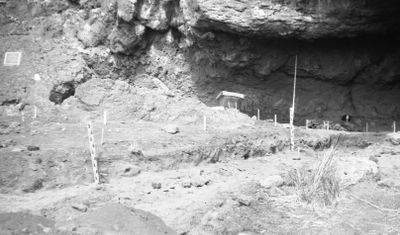
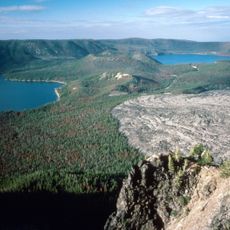
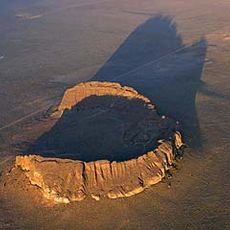
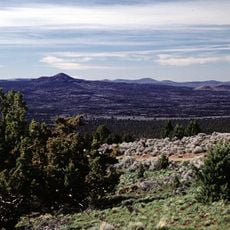
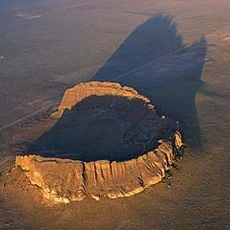
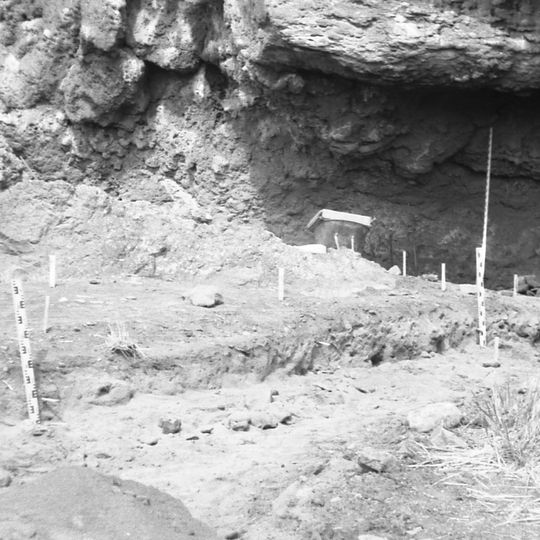
Fort Rock Cave is a rock shelter in the Fort Rock formation in Lake County, Oregon, with an opening about 70 feet across and a depth of nearly 60 feet, the largest cave in the area. It faces southeast, and its overhanging grey basalt rim shelters a dusty floor where white measuring rods stand. The walls show layers of Hayes Butte basalt, Pliocene lava, and Mount Mazama pumice and ash.
Excavations in 1938 uncovered many ancient sandals and tools buried beneath volcanic ash from Mount Mazama's eruption around 7,600 years ago. These discoveries allowed researchers to understand how people lived in this region during the early stone age.
The sandals found here gave their name to a style: flat, closed-toed, with a twined sole, later identified at Cougar Mountain and Catlow Caves. Some woven pieces carry diagonal twining and false embroidery, showing these techniques were already used in the region. Examples are displayed at the University of Oregon Museum of Natural and Cultural History in Eugene and in the town of Fort Rock.
Visiting requires planning ahead, as access is controlled through the Oregon Parks and Recreation Department, which organizes guided tours of the site. Check current conditions and booking requirements before you go to ensure you can experience this protected archaeological location.
The cave was long known locally as Cow Cave and Menkenmaier Cave before its archaeological fame. Luther Cressman's team also found basket fragments with diagonal twining and false embroidery, showing these weaving techniques already existed in the region when the sandals were made.
The community of curious travelers
AroundUs brings together thousands of curated places, local tips, and hidden gems, enriched daily by 93,465 contributors worldwide.