Bishop Tuff, Volcanic formation in Inyo and Mono Counties, California, United States
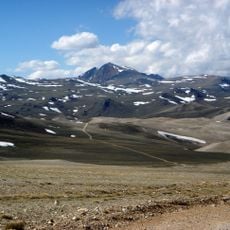
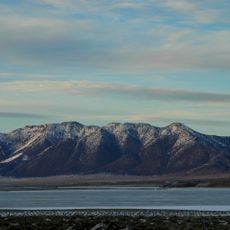
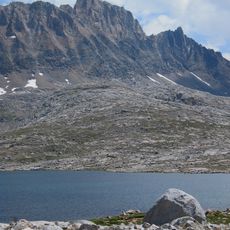
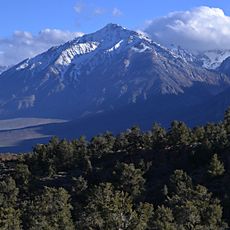
Bishop Tuff is a welded rhyolitic tuff of ash and pumice that caps a volcanic plateau in the northern Owens Valley, eastern California. Its outflow sheet covers nearly 2,200 km2 and reaches thicknesses of 200 m. The Owens River has cut the Owens River Gorge through the Volcanic Tableland, exposing the ignimbrite.
The Bishop Tuff formed 764,800 ± 600 years ago as a rhyolitic pyroclastic flow during an eruption of about six days that collapsed the Long Valley Caldera. Roughly 200 cubic kilometres of ash and tuff were ejected beyond the caldera, and the outflow sheet now caps a plateau in the northern Owens Valley, where the Owens River has since cut the Owens River Gorge.
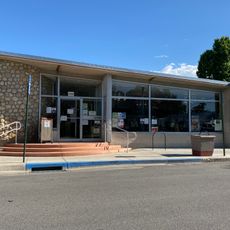
Southern Paiute groups lived in the Volcanic Tablelands in prehistoric and historic times and left petroglyphs, ritual carvings, on many rock faces. The land is almost entirely federal property managed by the Bureau of Land Management, which keeps a small visitor contact station on the access road with information on recreation.
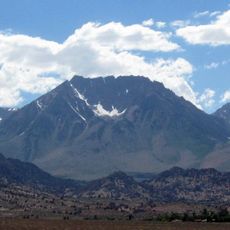
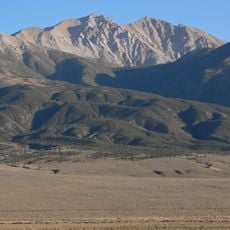
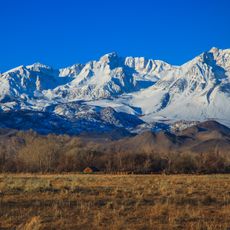
You can reach the formation via roads near Crowley Lake and Bishop, with multiple viewpoints allowing you to see the structure from different angles. The warmer months offer the best conditions for exploring and observing the layered deposits.
The Owens River has cut deep gorges through the volcanic tableland, revealing different mineral layers within the rock. This natural erosion exposes the composition of the stone in a way that rewards closer observation.
The community of curious travelers
AroundUs brings together thousands of curated places, local tips, and hidden gems, enriched daily by 93,113 contributors worldwide.