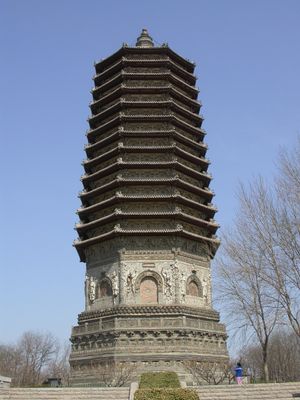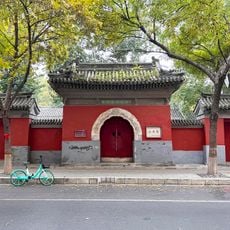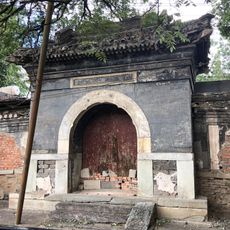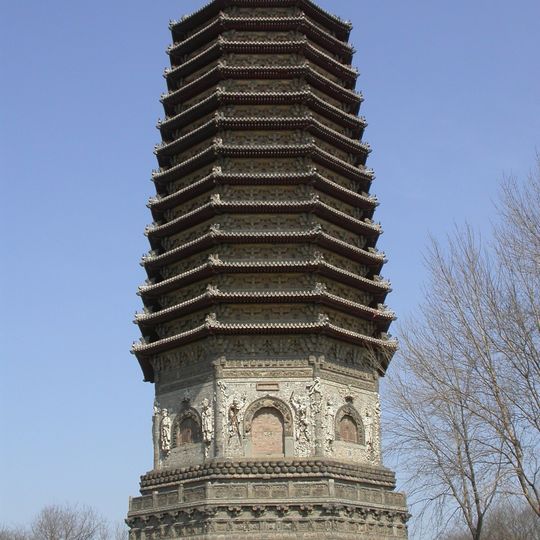
Pagoda of Cishou Temple, Buddhist pagoda in Haidian District, China
The Cishou Temple pagoda is a stone and brick structure featuring thirteen tiers of eaves rising to approximately 50 meters with an octagonal base. The entire construction consists of multiple levels with ornamental details that serve both structural and decorative purposes.
The structure was commissioned in 1576 during the Ming Dynasty by Empress Dowager Li and modeled after the Tianning Temple pagoda. This royal commission demonstrates the importance religious buildings held for the imperial family.
The pagoda base displays 312 Buddhist statues carved into niches, along with depictions of traditional Chinese musical instruments such as the guqin and sheng. These decorative elements reflect the artistic craftsmanship and religious devotion that shaped the site.
The site is best reached using public transportation, particularly via the Cishousi station near the Balizhuang neighborhood. Visitors should expect the best visibility and accessibility in the morning or early afternoon when fewer people are present.
The structure sits on a sumeru pedestal base featuring relief sculptures of Buddha figures and lotus petals that continue architectural traditions from the Liao dynasty. This blend of styles shows how religious and artistic traditions were carried forward across multiple periods.
The community of curious travelers
AroundUs brings together thousands of curated places, local tips, and hidden gems, enriched daily by 91,986 contributors worldwide.