Military Museum of the Chinese People's Revolution, Military museum in Haidian, Beijing, China
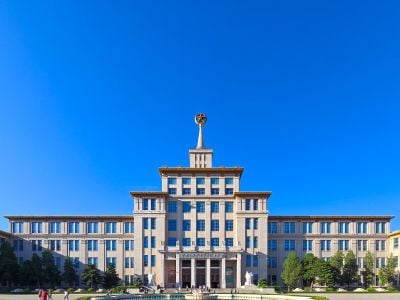
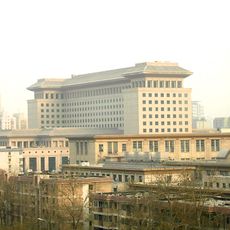
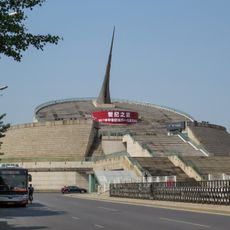
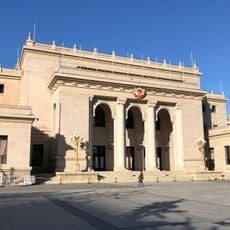
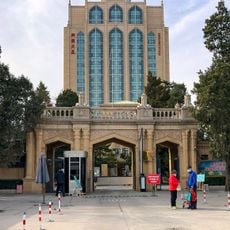
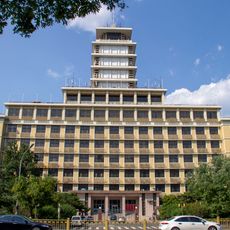
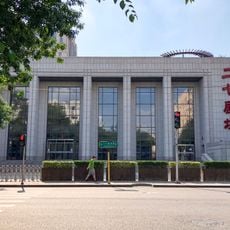
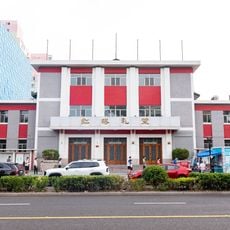
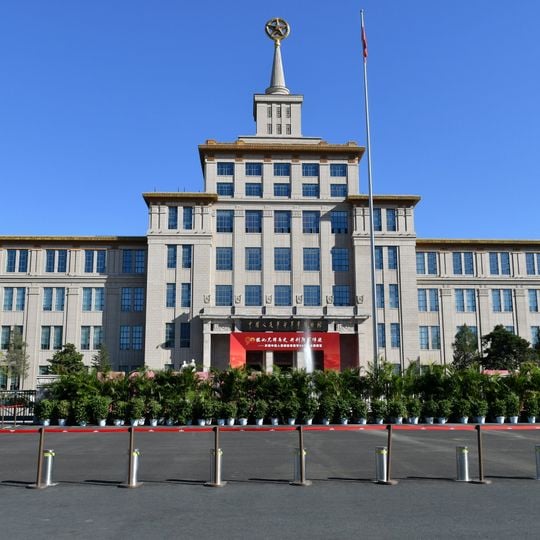
The Military Museum of the Chinese People's Revolution occupies a symmetrical stone-faced building on Fuxing Road, with long wings and a central block topped by a stepped tower crowned with the PLA emblem and a spire. A red banner with white Chinese characters hangs over the entrance portico. Inside, four floors hold ten halls, the largest being the Hall of Weapons, which displays aircraft, tanks, missiles and a two-seat orbital capsule.
The museum was one of the Ten Great Buildings erected for the tenth anniversary of the People's Republic. Construction ran from October 1958 to August 1960, and it opened on 1 August 1960, Armed Forces Day, with its name inscribed by Mao Zedong. A reconstruction between 2012 and 2017 expanded the exhibition surface from 60,000 to 159,000 square meters and added a larger central hall for aircraft and missiles.
This institution preserves extensive collections documenting the military development of the People's Republic of China, including weapons, uniforms, documents, and personal effects of significant military figures. It serves as a public education facility promoting understanding of military history and the role of armed forces in Chinese society. The site receives millions of annual visitors including school groups and military delegations from various countries, functioning as a major patriotic education base.
Entry is free daily from 9:00 AM to 5:00 PM, with last admission at 4:00 PM. Visitors must present valid identification and pass through security screening. Military Museum metro station on Line 1 and Line 9 provides direct access. Guided tours in Chinese are available at no charge, while English-language tours can be arranged with advance booking. A café and souvenir shop operate on the ground floor, and photography is permitted in most areas.
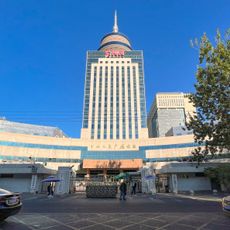
The tower is crowned by the emblem of the People's Liberation Army rather than a plain red star, unlike the nearby Beijing Telegraph and Long-Distance Telephone buildings, which share the same Soviet-style design. In the south plaza stand ten Qing-dynasty iron cannons, five on each side, beside a naval missile boat and a Dongfeng-2 missile.
The community of curious travelers
AroundUs brings together thousands of curated places, local tips, and hidden gems, enriched daily by 92,785 contributors worldwide.